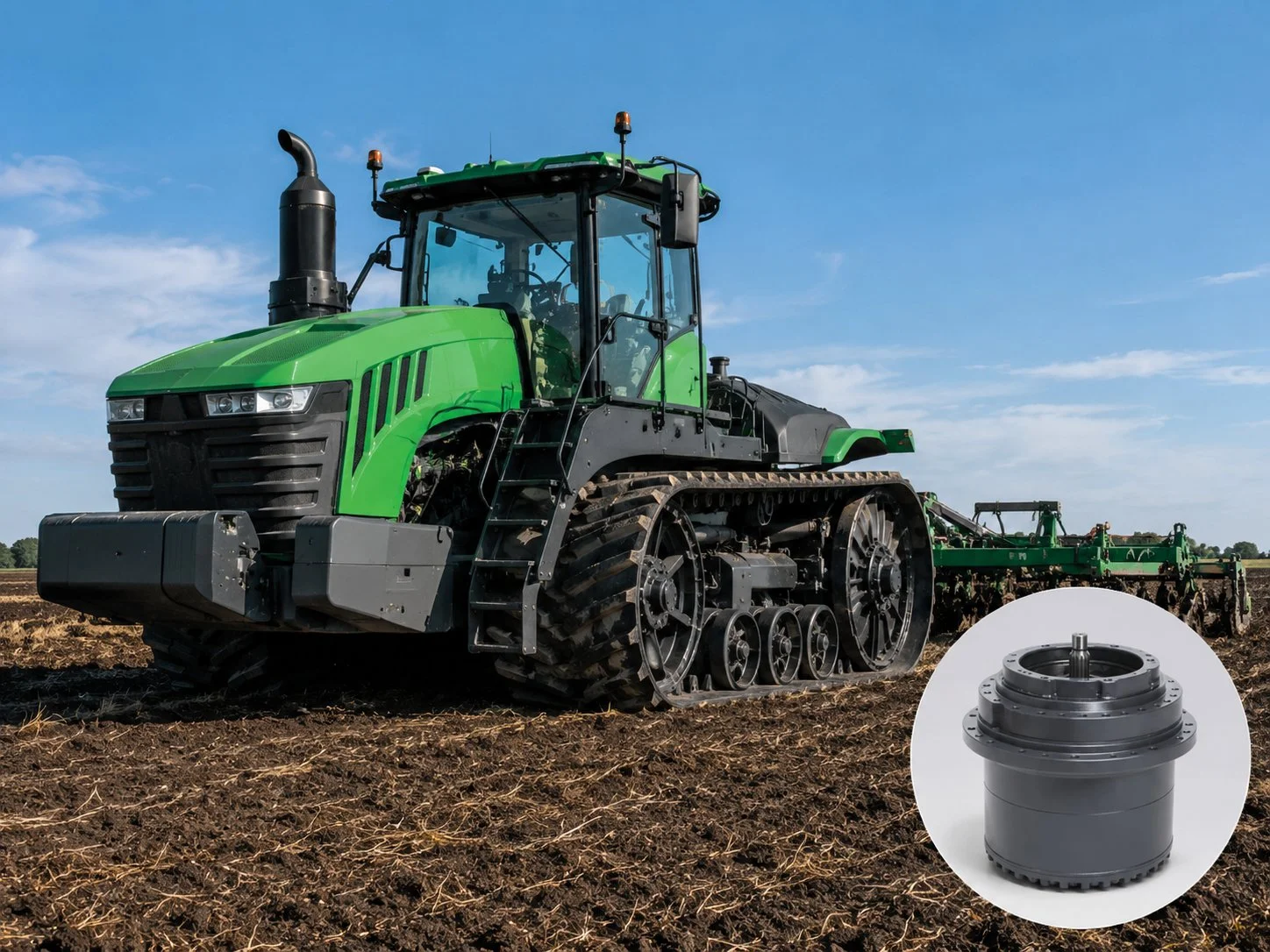
Työntö vs. veto – Miksi telaketjutraktorin telaketjuveto ei ole puskutraktorin telaketjuveto
Puskutraktori työntää materiaalia edessä olevalla terällä. Terän reaktiovoima painaa taaksepäin teloja vasten, ja telaketjujen on voitettava sekä vierintävastus että terän vastus samanaikaisesti. Telatraktori vetää työkoneita – auroja, repimiä, lautasäkeitä, putkiston sivupuomeja – vetoaisan tai kolmipistekiinnityksen avulla takana. Työkoneen vetovoima vetää traktoria taaksepäin, ja telaketjuvetoinen planeettavaihteisto on voitettava sekä vierintävastus että työkoneen vetovoima ylläpitääkseen eteenpäin suuntautuvaa nopeutta.
Mekaaniset kuormitukset ovat suuruudeltaan samanlaisia. Ero on käyttösuhteessa ja nopeusprofiilissa:
| Parametri | Puskutraktori (työntö) | Telatraktori (veto) |
|---|---|---|
| Tyypillinen ajonopeus | 2–4 km/h (työntövaihteella) | 4–8 km/h (peltonopeus) |
| Vääntömomentin kysyntäprofiili | Lähes vakio, 80–100% | Muuttuva, 40–80% keskiarvo. |
| Suunnanvaihdot vuoroa kohden | 100–200 (työntö + peruutus) | 10–30 (päistekäännökset) |
| Vuosittaiset käyttötunnit | 1 500–4 000 tuntia vuodessa | 400–1 200 h/vuosi (kausiluonteinen) |
| Ensisijainen kulumisajuri | Jatkuva lämpökuorma | Kausittainen varastokorroosio |
| Maaperäolosuhteet | Suunniteltu pinta | Luonnollinen maaperä, usein kyllästynyt |
Telaketjujen mitoituksen keskeinen ero: Telaketjutraktorin telaketjuveto toimii suuremmalla lähtönopeudella (4–8 km/h verrattuna puskutraktorin 2–4 km/h), mutta pienemmällä jatkuvalla vääntömomentilla (40–80% vs. 80–100%). Suurempi nopeus tarkoittaa, että telaketjuveto tuottaa vähemmän lämpöä vääntömomentin newtonmetriä kohden (öljy kiertää nopeammin, mikä parantaa jäähdytystä). Pienempi jatkuva vääntömomentti ei kuitenkaan tarkoita, että telaketjuvetoa voitaisiin pienentää – huippuvääntömomentti työkoneen kytkennän aikana (auran osuessa kiveen, repijän osuessa juureen) voi nousta 150–200%:iin jatkuvasta vetovoimasta.
Alhainen pintapaine – telaketjutraktorin telaketjukäytön suunnitteluprioriteetti
Ensisijainen syy telatraktorin käyttöön pyörätraktorin sijaan on maanpaine. Pyörätraktori keskittää painonsa neljälle renkaan kosketusalueelle, joiden yhteispinta-ala on 0,1–0,2 neliömetriä. Telatraktori jakaa saman painon kahdelle telaketjulle, joiden yhteispinta-ala on 0,8–2,0 neliömetriä, mikä vähentää maanpainetta 5–15-kertaisesti. Tämä mahdollistaa työskentelyn maaperällä, jonka pyörätraktori tuhoaisi.
Tulvivien riisipeltojen kantavuus on 10–25 kPa – pehmein työalusta kaikista maatalouskäytössä olevista viljelyistä. Telatraktorin on kelluttava lätäköisellä pinnalla vajoamatta telaketjujen yläreunan alapuolelle. Erittäin leveitä teloja (450–600 mm) käytetään 15–20 kPa:n maanpaineen saavuttamiseksi. Telaketjukäyttö toimii osittain veden ja lietteen peitossa koko työkauden, mikä asettaa äärimmäisiä vaatimuksia kaksoiskartiotiivisteelle ja kotelon korroosionkestävyydelle.
Putkilinjan tela-alustaiset traktorit (sivupuomitraktorit) kuljettavat 5–40 tonnin painoisia putkikuormia sivuttaispuomista liikkuessaan putkilinjan reunaa pitkin. Telaketjujen on kannateltava koneen painoa ja putkikuormaa riittävän alhaisilla maanpaineilla, jotta ne voivat ylittää kosteikot, pellot ja metsänpohjan urautumatta. Putkien sivuttaiskuorman ja pehmeän maanpinnan yhdistelmä luo telaketjuille ainutlaatuisen epäsymmetrisen kuormitustilanteen – puomin puoleinen vetolaite kantaa huomattavasti enemmän painoa kuin puomin ulkopuolinen vetolaite.
Vetovoiman mitoitus — 12 tonnin telatraktorin telaketjujen vääntömomentin laskeminen
Toisin kuin puskutraktorien ja kaivinkoneiden telaketjukäytöissä (joissa koneen paino ja kaltevuus hallitsevat vääntömomentin laskentaa), telaketjutraktorin vääntömomentti määräytyy pääasiassa työkoneen vetovoiman mukaan. Painavampi työkone – monivarsinainen repijä, suuri lautasäes tai 20 tonnia putkea kuljettava putkiston sivupuomi – voi kaksinkertaistaa tai kolminkertaistaa telaketjukäytön vääntömomentin tarpeen verrattuna pelkän traktorin vierintävastukseen. Telaketjukäytön spesifikaatioiden on oltava traktorin vetävän raskaimman työkoneen mukaisia, ei pelkästään traktorin painon mukaisia.
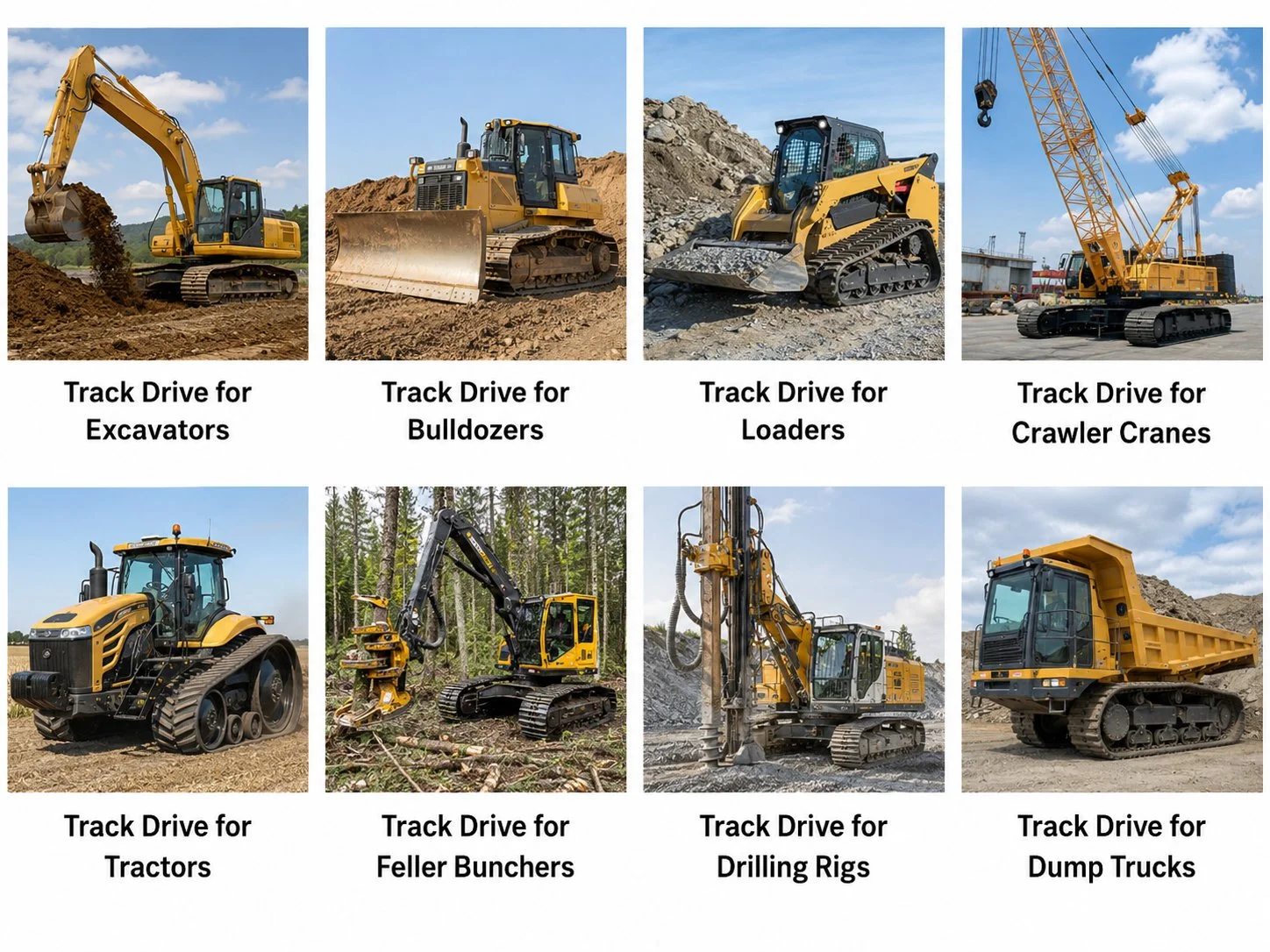
Kausikäyttö ja varastointi – Maataloustraktoreiden ainutlaatuinen huoltohaaste
Rakennuskoneet ovat käytössä ympäri vuoden. Maatalouden telaketjutraktorit toimivat kausiluonteisesti – intensiivisesti viikkoja kylvön, maanmuokkauksen ja sadonkorjuun aikana, minkä jälkeen ne varastoidaan kuukausiksi. Tämä kausiluonteinen toimintamalli luo ainutlaatuisen telaketjukäytön huoltohaasteen: vaihteisto viettää suuremman osan kalenteriaikastaan paikallaan kuin käynnissä.
Yö-päivä -lämpösyklit pumppaavat kosteutta suljettuun vaihteistokoteloon huohottimen kautta. 4–8 kuukauden varastoinnin aikana kertynyt kosteus laskeutuu öljykylvyn pohjalle ja alkaa syövyttää alimpia laakeripintoja. Kun traktori otetaan uudelleen käyttöön keväällä, saastunut öljy kierrätetään koko vaihteistossa – levittäen korroosiotuotteita jokaiseen laakeri- ja vaihteistopintaan. Tämä kausiluonteinen kondenssi-korroosiosykli on maataloustelaketjujen voimansiirtojen ensisijainen käyttöikää rajoittava mekanismi – ei vaihteiston hampaiden kuluminen tai laakerien väsyminen.
Kuukausia paikallaan pysyvät kaksoiskartiotiivisteet kehittävät "muistin" elastomeerisiin O-renkaisiin – kumi mukautuu puristettuun muotoonsa ja menettää palautumisvoimansa. Kun traktori otetaan uudelleen käyttöön, tiivisteen kosketuspaine pienenee, jolloin öljy valuu aluksi, kunnes O-rengas palautuu. Lisäksi metallisiin tiivistepintoihin voi muodostua tarttumiskuvioita (samanlaisia kuin telaketjunostureiden seisontajarrulevyjen tarttuminen), joiden irrottaminen vaatii lyhyen suuren vääntömomentin irrotuksen. Ketjupyörän kuukausittainen manuaalinen pyörittäminen varastoinnin aikana estää molemmat tilanteet.
Maataloustraktorien telaketjujen voimansiirron vaikuttavin yksittäinen huoltokäytäntö: vaihda öljy ennen kauden ensimmäistä peltopäivää – ei viimeisen päivän jälkeen. Tyhjennä varastoinnin saastuttama öljy (joka voi sisältää 500–2 000 ppm kosteutta), huuhtele puhtaalla öljyllä ja täytä uudella vaihteistoöljyllä, joka on mitoitettu odotetulle peltolämpötilalle. Tämä öljynvaihto ennen kautta poistaa kertyneen kondenssiveden ennen kuin se pääsee kiertämään laakereissa kuormituksen alaisena. Korea Ever-Power suosittelee tätä protokollaa kaikille telaketjutraktoreille, joilla on kausiluonteiset käyttötavat.
Kolme vikaantumistapaa, jotka hallitsevat telaketjutraktorin telaketjujen vaihtoa
Maatalouden telaketjuvaihteiston vikaantumisen johtava syy maailmanlaajuisesti. 4–8 kuukauden varastoinnin jälkeen vaihteistoöljyn kosteuspitoisuus voi nousta 1 000–3 000 ppm:ään – selvästi yli 200 ppm:n kynnysarvon, jolla laakerikorroosio alkaa vakioteräksessä. Ensimmäiset 50–100 käyttötuntia kauden aikana vesipitoinen öljy jakautuu jokaiseen laakeriin – ja veden, kuormituksen ja lämpötilan yhdistelmä kiihdyttää korroosiota nopeammin kuin kauden aikana koskaan voisi. Telaketjuvaihteisto, joka toimi moitteettomasti edellisen kauden lopussa, voi antaa laakerimelua uuden kauden ensimmäisellä viikolla, jos varastoöljyä ei ole vaihdettu.
Lautasauran tai repijän varren osuminen maahan haudattuun kallioon, juureen tai vanhaan aidantolppaan aiheuttaa telaketjujen vetoon vääntömomenttipiikin, joka on 150–250% vakiotilan vetovoimasta. Maatalouspelloilla – toisin kuin insinöörityömailla – on tuntemattomia maanalaisia esteitä, joita ei voida ennustaa tai välttää. Piikki välittyy vetoaisan kautta teloille ja planeettavaihteistoon äkillisenä vääntökuormana. Satojen tällaisten tapahtumien aikana kauden aikana aurinkopyörän uraan ja ensimmäisen vaiheen planeettapyörän hampaat kertyvät väsymisvaurioiksi, jotka lyhentävät käyttöikää kondenssirajoitetun lähtötason alapuolelle.
Riisipeltojen ja kosteikkojen telaketjutraktorit toimivat telaketjut osittain tai kokonaan veden ja lietteen alla viikkojen ajan. Jatkuva altistuminen vedelle heikentää kaksoiskartiotiivisteen O-rengaselastomeeria (tavalliset NBR-yhdisteet imevät vettä ja turpoavat, mikä vähentää kosketuspainetta). Kahden tai kolmen märän pellon käyttökauden jälkeen O-renkaan elastisuus laskee alle tiivistepintojen kosketuksen ylläpitämiseen tarvittavan vähimmäisarvon – ja vettä alkaa päästä öljykylpyyn. Telaketjuöljy muuttuu maitomaiseksi muutamassa päivässä, ja laakerit korroosio seuraavat nopeasti.
Traktoreiden telaketjupyörästöinen planeettavaihteisto – usein kysytyt kysymykset
Korea Ever-Power tarjoaa tela-alustaisten traktoreiden planeettavaihteistoja 3 000–25 000 Nm:n momentilla maatalous- ja hyötykäyttöön. Saatavilla on FKM-märkäpeltojen tiivisteet, kylmän ilmaston synteettiset öljyvaatimukset ja kausittaisen varastoinnin huoltotuki. Ilmoita traktorisi malli ja ensisijainen työkone saadaksesi suositusta erittelyistä.
Toimittaja: Cxm