ZL35 Winch Drive Planetary Gearbox — 1-4 Stage
3.84 — 2,397
624:1 speed range. One gearbox family.
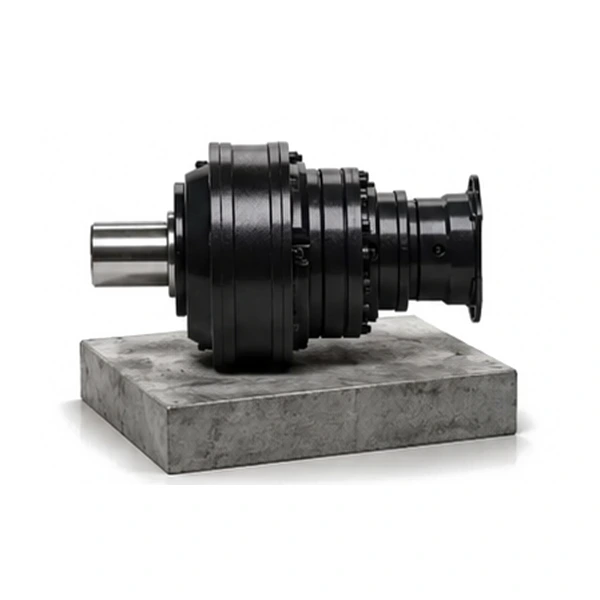
The EP-ZL35 winch drive planetary gearbox spans from near-direct-drive to ultra-precision positioning within one product designation. At 34,000 Nm continuous and 85,000 Nm peak, it steps up from the ZL30 in torque capacity while extending the ratio range in both directions — lower at the fast end and higher at the slow end.
Across the entire planetary gearbox catalogue — winch drives, wheel drives, slewing drives, precision drives — no other product spans 624:1 between its lowest and highest available ratio. The 406AW, the widest-ranging 4xxW winch drive, spans 9.6:1 (ratios 23-220). The ZL35 spans 624:1 (ratios 3.84-2,397). This is not the same kind of product serving the same kind of application. The ZL35 is a platform that replaces entire families of specialised winch drives — from fast cargo hoists to slow scientific deployment systems — with a single product designation, a single spare parts catalogue, and a single engineering support relationship.
ZL35 Electric Winch Drive Planetary Gearbox — Technical Parameters
| Continuous torque (N2xh=100,000) | 34,000 Nm |
| Peak torque | 85,000 Nm (2.5x continuous) |
| Gear ratio range | 3.84 to 2,397 (1-4 stages, catalogue widest) |
| Maximum input speed | 4,000 rpm |
| Thermal power (Pt) | 17 - 53 kW (varies by stage count) |
| Gear type | Helical planetary, 3-planet, DIN 5-6 |
| Integrated brake | None (motor brake or external brake) |
| Sealing | Multi-lip FKM, IP67+ |
| Housing | Ductile iron QT600-3 |
| Gear material | 20CrMnTi, HRC 58-62 |
Ratio 3.84 — When the Drum Nearly Matches the Motor
At ratio 3.84 with a 3,000 rpm motor, the ZL35 output spins at 781 rpm. On a 300 mm PCD drum, this produces a line speed of 736 m/min — faster than any crane or cargo winch operates. But this is not a crane hoist ratio. It is the ratio for systems that need to deploy and recover cable as fast as physically possible.
ROV Launch and Recovery Systems
Remotely operated vehicle (ROV) launch and recovery systems (LARS) must deploy the ROV through the splash zone as fast as possible to minimise wave-induced pendulum motion. At ratio 3.84 with the motor at moderate speed (1,500-2,500 rpm), the drum produces 60-120 m/min of umbilical cable speed — fast enough to transit the splash zone in under 5 seconds. Once below the wave influence, the motor slows to a controlled descent speed for the remaining depth. The single-stage ratio provides the speed; the VFD provides the control.
Fast Cargo Transfer Winches
Ship-to-ship and ship-to-shore light cargo transfer where cycle speed determines throughput. At ratio 3.84, the ZL35 paired with a 150-250 kW motor hoists 1-5 tonne loads at 40-80 m/min — 2-3 times faster than a conventional crane hoist gearbox at the same power input. The low gear ratio means low torque multiplication, so the motor must be large relative to the load — but for light-load, high-speed transfer operations, the speed advantage justifies the motor cost.
Emergency Recovery Winches
Man-overboard recovery winches, rescue basket hoists, and emergency evacuation cable systems where the speed of recovery directly affects survival. At ratio 3.84, the ZL35 can achieve the rapid cable recovery speeds that rescue protocols demand — 30-60 m/min — with moderate motor power. The 85,000 Nm peak absorbs the shock when the rescue basket contacts the water surface and the cable snaps taut.
Ratio 2,397 — The Highest Ratio in the Entire Planetary Gearbox Catalogue
At ratio 2,397 with a 3,000 rpm motor, the ZL35 output turns at 1.25 rpm — one revolution every 48 seconds. On a 300 mm PCD drum, line speed is 1.18 m/min. On a 200 mm PCD drum: 0.79 m/min — 13 millimetres per second.
| आवेदन | Motor RPM | Drum RPM | Line Speed (300mm PCD) |
|---|---|---|---|
| Oceanographic CTD winch | 1,500 | 0.63 | 0.59 m/min |
| Borehole sensor deployment | 2,000 | 0.83 | 0.79 m/min |
| Subsea cable tensioning | 3,000 | 1.25 | 1.18 m/min |
| Nuclear fuel handling | 500 | 0.21 | 0.20 m/min (3.3 mm/sec) |
At ratio 2,397, a 10,000 PPR motor encoder produces 23,970,000 pulses per output revolution. Each encoder pulse corresponds to a drum surface movement of 0.039 mm on a 300 mm PCD drum — 39 microns. The VFD can command any position within this resolution. Combined with the DIN 5-6 gear accuracy and the helical tooth contact pattern, the ZL35 at ratio 2,397 enables closed-loop cable positioning at a precision that approaches the mechanical limit of the wire rope stretch itself.
34,000 Nm Across 624:1 — One Gearbox Family for Every Electric Winch Speed

ROV Launch and Recovery Systems
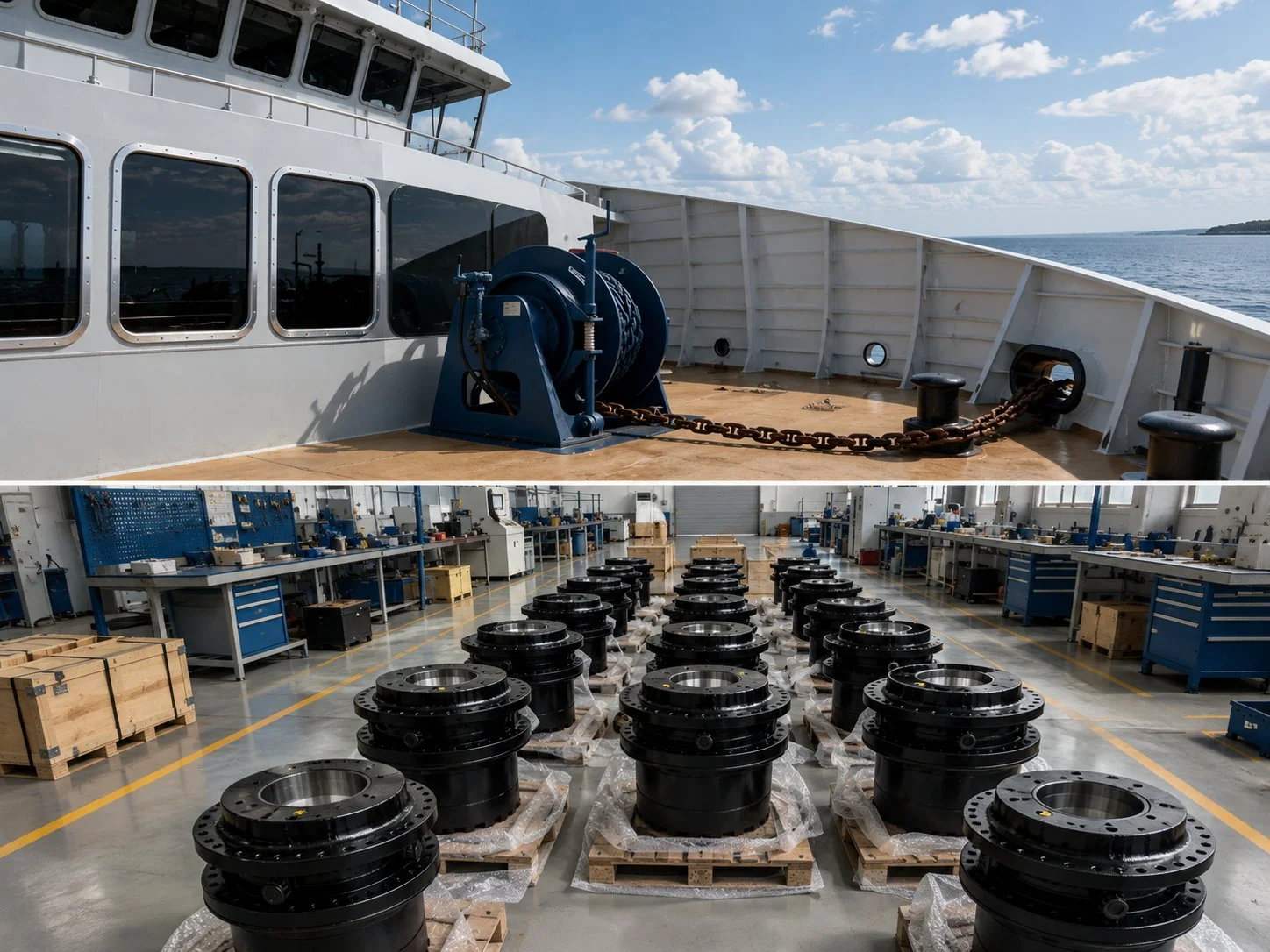
Complete LARS winch drives for work-class and observation-class ROVs on offshore support vessels, research vessels, and naval platforms. The ZL35 at ratio 4-15 provides the splash-zone transit speed (60-120 m/min), and the VFD reduces the motor speed for controlled descent at depth (5-30 m/min). A single ZL35 covers both speed regimes without a two-speed gearbox. The slewing drive positions the A-frame or over-boarding system on the same vessel.
Electric Crane Hoists (15-30 t SWL)
The ZL35 at ratio 40-120 paired with 150-350 kW electric motors provides the main hoist torque for new-generation all-electric cranes. At 34,000 Nm continuous, the ZL35 covers the same crane SWL range as the 4xxW models from 407AW (18,000 Nm) to 410W3 (37,500 Nm) — but with helical-gear quiet operation, regen braking compatibility, and the 85,000 Nm peak that absorbs shock loads the equivalent 4xxW models handle only with derating.
Scientific and Oceanographic Winches
CTD (conductivity-temperature-depth) profilers, sediment corers, and deep-ocean instrument packages deployed at sub-metre-per-minute cable speeds through 2,000-6,000 metres of water. The ZL35 at ratio 1,000-2,397 provides the ultra-slow drum speed, and the DIN 5-6 gear accuracy plus motor encoder resolution enables the research team to command depth to within centimetres at any point in the water column. The auxiliary drives handle the vessel A-frame and instrument handling systems.
The ZL Electric Winch Drive Family


Electric Winch Drive Planetary Gearbox — ZL35 Ratio Range FAQ
Field Reports
Work-class ROV LARS winch on a DSV. ZL35 at ratio 8, single-stage, paired with a 200 kW PMSM motor. Splash-zone transit at 80 m/min — the ROV passes through the wave influence zone in 3.5 seconds, eliminating the pendulum-induced umbilical stress that was our number-one failure mode with the previous slow-speed winch. Controlled descent at 1,500 m depth at 15 m/min through VFD speed reduction. The 85,000 Nm peak handled the snatch load when the ROV entered the current shear layer at 800 m without any protection trip. Twelve months in service, 340 deployments, zero umbilical failures. The ROV availability rate improved from 91% to 98% — directly attributable to the fast splash-zone transit.
All-electric 25 t harbour crane, main hoist, ZL35 at ratio 80, 2-stage, 300 kW AC motor. The ZL35 replaced a 4xxW-family hydraulic winch drive and eliminated the hydraulic power unit, the oil cooler, and 200 metres of hydraulic hose. Weight saving: 380 kg on the crane head. Noise at the operator station: 58 dB(A) — 14 dB below the hydraulic baseline. Regen energy recovery across 3 months of harbour operations: 22% of the lowering energy returned to the grid. The 85,000 Nm peak handles the container snatch loads that occur when the spreader locks engage on a swinging container — previously the leading cause of hydraulic pressure spikes and hose bursts on the old crane.
Oceanographic CTD winch on a research vessel, ZL35 at ratio 1,800 (4-stage), 15 kW servo motor. The winch deploys a CTD rosette to 4,000 m depth at 0.8 m/min descent — exactly the speed our sampling protocol requires for the thermocline layer profiling. Depth accuracy measured by acoustic altimeter at the instrument package: within 0.3 metres at 4,000 m — exceptional for a cable-deployed system. The 4-star is a thermal observation: at 4-stage ratio 1,800, the thermal power limit is approximately 18 kW. Our 15 kW motor is within this limit during descent but marginally exceeds it during sustained recovery at full speed with a loaded rosette (22 bottles x 10 L = 220 kg). We added a small fin-tube oil cooler that resolved the issue. For scientific winch applications at high stage counts, publishing the Pt value for each stage-count variant on the product data sheet would help scientists size the cooling requirement during the specification phase.
अतिरिक्त जानकारी
| संपादक | सीएक्सएम |
|---|
संबंधित उत्पाद
-
ZL150 Winch Drive Planetary Gearbox — 1-5 Stage
-
ZL120 Winch Drive Planetary Gearbox
-
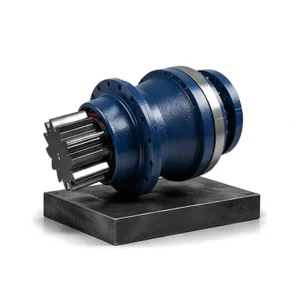
ZL95 Winch Drive Planetary Gearbox
-
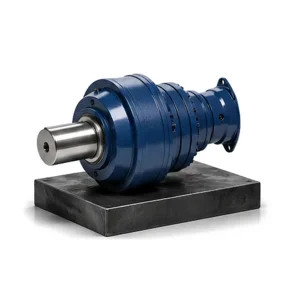
ZL45 Winch Drive Planetary Gearbox — 1-4 Stage
-

415W3 विंच ड्राइव प्लेनेटरी गियरबॉक्स रिड्यूसर
-
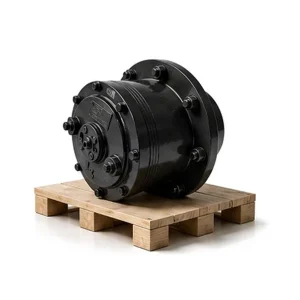
406AW Winch Drive Planetary Gearbox Reducer
-

403W2 Winch Drive Planetary Gearbox Reducer — 2-Stage
-
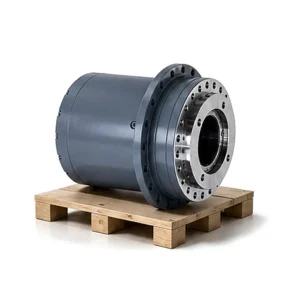
402W2 Winch Drive Planetary Gearbox Reducer