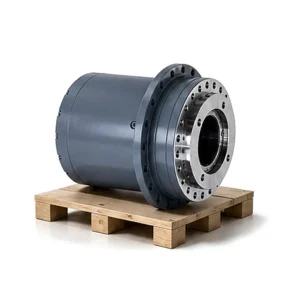
417W3 Μειωτής Πλανητικού Κιβωτίου Ταχυτήτων με Βαρούλκο
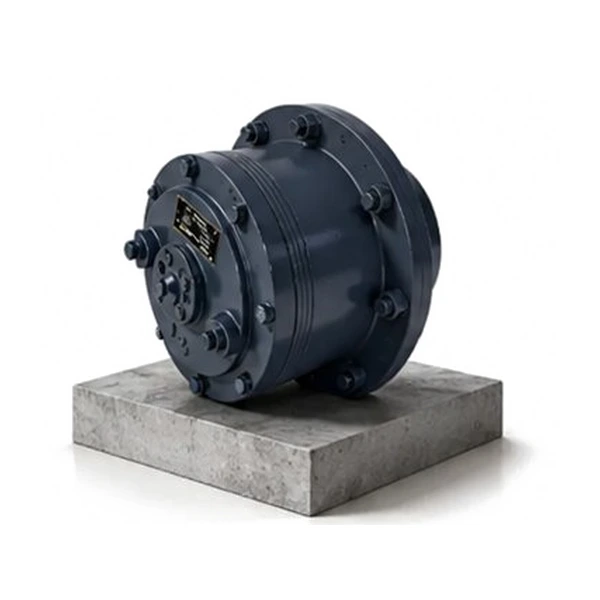
2.25 TONNES
FEM M6
250,000 Nm
The brake holds more than the rope can carry.
The EP-417W3 is the penultimate model in the 4xxW winch drive planetary gearbox series — only the 419W3 at 330,000 Nm sits above it. At 250,000 Nm and 2,250 kg, the 417W3 serves a very short list of applications: the largest anchor handling tug supply vessels in the global fleet, the deepest production mining shafts in operation, and the heaviest semi-submersible mooring systems deployed in ultra-deepwater. These are machines where the winch is not an accessory — it is the primary revenue-generating function of the vessel or the mine, and a winch failure halts operations worth millions of dollars per day.
417W3 Winch Drive Planetary Gearbox — Technical Parameters
| Ονομαστική ροπή εξόδου | 250,000 Nm |
| Εύρος σχέσης μετάδοσης | 80 to 300 (three-stage planetary) |
| Μέγιστη ταχύτητα εισόδου | 2.500 σ.α.λ. |
| Maximum output speed | 10 rpm (FEM M6 heavy continuous duty) |
| Μηχανική απόδοση | ≥ 94% |
| Χειρόφρενο | 2,000 Nm, multi-disc, spring-applied, hydraulic release |
| Brake at drum (max ratio 300) | 600,000 Nm |
| Mounting | Heavy-duty rotating housing flanges |
| Ξηρό βάρος | Approx. 2,250 kg |
| Λάδωμα | Oil bath splash, premium EP gear oil + external cooler recommended |
| Θερμοκρασία λειτουργίας | -25 έως +85 βαθμοί Κελσίου |
600,000 Nm at the Drum — Where the Brake Holds More Than the Rope Can Carry
At 2,000 Nm through ratio 300, the 417W3 brake produces 600,000 Nm of drum holding torque. On a 700 mm PCD drum, this translates to a holding line pull of 1,714 kN (175 tonnes). Compare this to the wire rope that typically serves on a 250,000 Nm winch.
| Wire Rope | MBL (kN) | Brake Hold on 700mm PCD (kN) | Brake / Rope MBL |
|---|---|---|---|
| 52 mm 6x36 IWRC (mining) | 1,570 | 1,714 | 109% — brake wins |
| 56 mm 6x36 IWRC (AHTS) | 1,820 | 1,714 | 94% |
| 64 mm 6x36 IWRC (heavy) | 2,370 | 1,714 | 72% |
With a 52 mm rope on a 700 mm drum at ratio 300, the brake holding force (1,714 kN) exceeds the rope minimum breaking load (1,570 kN). If both are loaded to their limits simultaneously, the rope will fail before the brake slips. The brake is no longer the weak link in the load-holding chain — the rope is. This inverts the traditional winch safety analysis and means the rope selection, not the brake, becomes the limiting factor for the maximum suspended load.
2,250 kg — When the Winch Drive Becomes the Structure
At 2,250 kg, the 417W3 is heavier than many of the machines the smaller winch drives serve. It is no longer a component that mounts onto an existing structure — it is a mass that the surrounding structure must be designed to carry, support, and service.
On an AHTS vessel, the 417W3 plus drum, cable, and motor assembly can total 8-12 tonnes — requiring dedicated structural reinforcement in the stern area. The vessel naval architect must account for this concentrated mass in the longitudinal strength calculation, the local deck plating design, and the ballast condition for stability with and without the winch loaded. The 417W3 mounting bolts must transmit the 250,000 Nm torque reaction into the deck structure — requiring a reinforced foundation frame that distributes the load across multiple deck frames rather than concentrating it on a single transverse.
On a mine headframe, the 417W3 drum assembly is mounted on a winder bed that transmits the torque reaction into the headframe foundations. The 2,250 kg gearbox weight is a minor fraction of the total drum and rope weight (which can exceed 20 tonnes at deep shafts), but the dynamic torque pulsations at 250,000 Nm induce vibration in the headframe structure that must be damped to prevent fatigue cracking at welded joints. Elastomeric isolation mounts between the winder bed and the headframe columns are standard practice at this torque level.
The 2,250 kg unit requires a crane or hoist with minimum 5,000 kg capacity for installation and removal. On AHTS vessels, the stern area must provide crane access for the ship crane during dry-dock maintenance. On mine headframes, a permanent overhead hoist capable of lifting the drum assembly (gearbox + drum + partial rope = 10-15 tonnes) should be incorporated into the headframe design. Contact Κορέα Ever-Power for the detailed foundation loading diagram and lifting frame specification.
250,000 Nm — The Penultimate Winch Drive for the World's Largest Machines

Largest-Class AHTS Vessels (350+ t Bollard Pull)
The ten to fifteen largest AHTS vessels operating globally — the 350-400 tonne bollard pull class that deploys anchor systems for ultra-deepwater semi-submersibles and FPSOs in water depths exceeding 2,000 metres. The 417W3 at ratio 200-300 provides the drum torque for handling 200-300 tonne chain and wire assemblies. The 2,000 Nm brake holds the full chain weight at maximum depth with safety factors that classification societies accept without supplementary analysis. The slewing drive positions the stern equipment.
Ultra-Deep Mine Production Winders (1,000-2,000 m)
The deepest operating mines — South African gold mines descending to 2,000+ metres, and deep Canadian and Australian mines at 1,000-1,500 metres — where the combined rope, skip, and ore weight at full depth reaches 100-150 tonnes. The 417W3 at ratio 250-300 provides the drum torque for production winding at these depths, and the 2,000 Nm brake exceeds the safety factor requirements of every major mining jurisdiction at these loads and depths.
Ultra-Deepwater Mooring Systems
Mooring winches on FPSOs and semi-submersibles maintaining station in ultra-deepwater (1,500-3,000 metres) where each mooring leg carries 150-250 tonnes of line tension during extreme weather events. The 417W3 provides the torque to deploy, adjust, and recover mooring lines under these tensions, while the 2,000 Nm brake maintains constant tension during months of continuous station-keeping. The auxiliary winch drives on the same platform handle the smaller tugger and guideline winches.
The Absolute Ceiling of the Winch Drive Catalogue
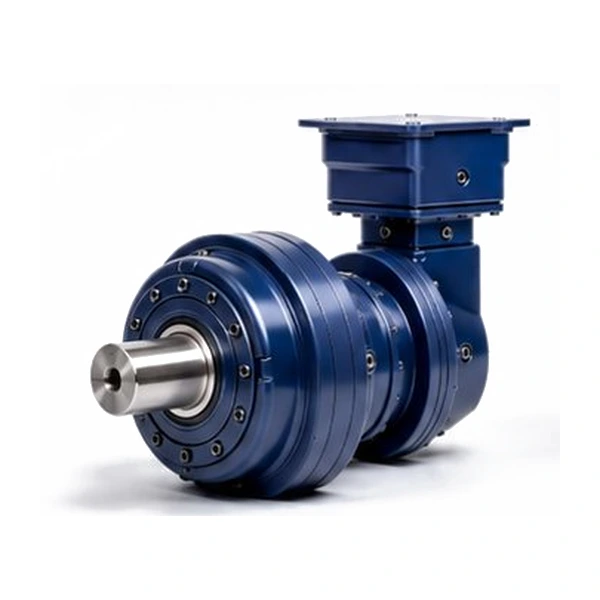

Winch Drive Planetary Gearbox — 250,000 Nm Class FAQ
Αναφορές πεδίου
380 t bollard pull AHTS, main anchor handling winch, 417W3 at ratio 220, dual 800 kW AC motors. The vessel completed 22 ultra-deepwater anchor deployments in the first 12 months — the deepest at 2,100 metres in the Santos Basin. The 2,000 Nm brake held the 240-tonne chain assembly at full depth during a 14-hour weather standby without a millimetre of chain counter movement. This is the third Ever-Power winch drive model in our fleet (we also run 416W3 and 413W3 on smaller vessels), and the 417W3 maintains the same build quality and documentation standard that secured class approval on the smaller units without supplementary requests.
Main ore winder at a 1,650-metre gold mine, 417W3 at ratio 280, single 1,100 kW AC motor with VFD. The skip carries 25 tonnes of ore through a shaft where the 56 mm rope weighs 8,250 kg at full depth. The brake safety factor at the deepest point (25,000 + 8,250 kg total, 800 mm PCD): SF = 600,000 / (33,250 x 9.81 x 0.4) = 4.6 — far exceeding the mine inspector minimum of 2.5. After 9 months of 3-shift production winding at 320 cycles per day, oil analysis shows zero bearing distress markers. The VFD regen braking recovers 18% of the skip descent energy to the mine electrical grid — a benefit the previous hydraulic winder could not provide.
FPSO 12-point mooring system, 2,500-metre water depth, one 417W3 per mooring leg at ratio 250. The winches have maintained station through 8 months of continuous operation including two tropical storm events where individual mooring legs carried sustained tensions exceeding 200 tonnes. The 4-star reflects an installation experience: the 2,250 kg weight required the FPSO construction crane at maximum capacity during the module installation phase — there was less than 5% crane margin remaining. If the 417W3 had been 200 kg heavier, the installation sequence would have required a separate heavy-lift crane mobilisation at significant additional cost. For future mega-class gearbox designs, every kilogram of weight reduction at this tier has a disproportionate impact on installation logistics and cost.
Επιπλέον πληροφορίες
| Συντάκτης | Cxm |
|---|
Σχετικά προϊόντα
-
ZR75 Winch Drive Planetary Gearbox — Right-Angle
-
ZR55 Winch Drive Planetary Gearbox — Right-Angle
-
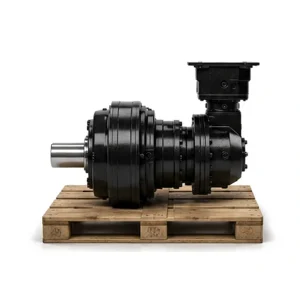
ZL150 Winch Drive Planetary Gearbox — 1-5 Stage
-
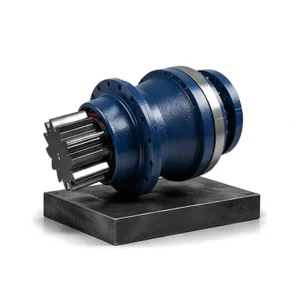
ZL95 Winch Drive Planetary Gearbox
-
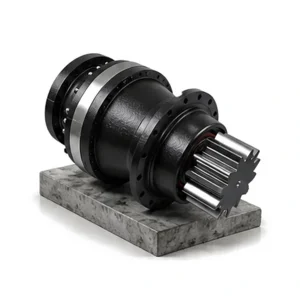
ZL55 Winch Drive Planetary Gearbox — 1-5 Stage
-
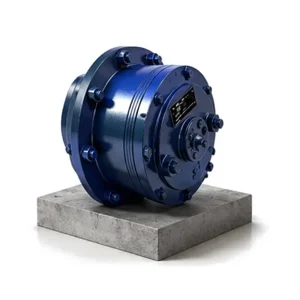
407W3 Μειωτής Πλανητικού Κιβωτίου Ταχυτήτων με Βαρούλκο
-

Πλανητικός μειωτήρας κιβωτίου ταχυτήτων με κίνηση βαρούλκου 405.4W
-
402W2 Μειωτής Πλανητικού Κιβωτίου Ταχυτήτων με Βαρούλκο