EP-SE406BT3 Triple-Stage Track Drive Planetary Gearbox
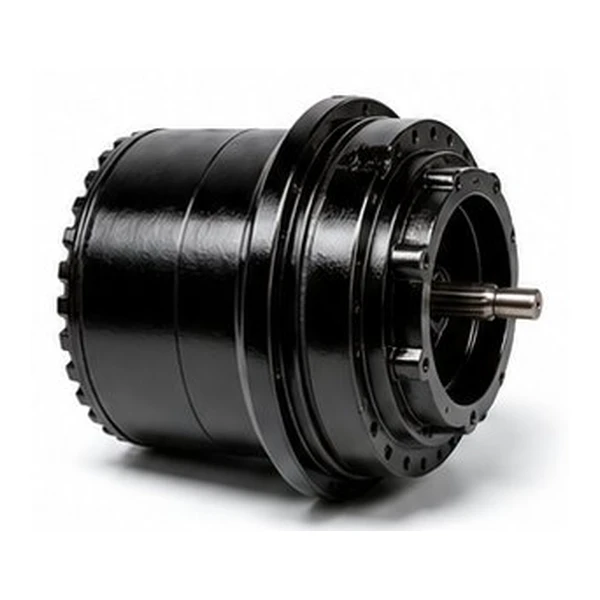
Every other high-torque unit in this series — including EP-SE406AT at 17,000 N·m — uses one or two principal reduction stages in the multi-stage arrangement. The EP-SE406BT3 explicitly uses three successive epicyclic stages (T3) in a single rotating-housing package. This is not simply an incremental extension of the two-stage concept: three stages allow each individual stage to operate at a comparatively modest ratio (approximately i^(1/3) per stage, giving 4.0–5.1 per stage across the i=63–136 range), keeping every stage within the high-efficiency operating zone of planetary gearing. The result is a 24,000 N·m unit that, despite three stages of reduction, maintains >94% stated efficiency — a figure that reflects the optimised tooth geometry and gear mesh conditions at these individual stage ratios.
The i=63–136 ratio band might appear narrower than the 9.6× span of EP-SE406AT — and it is. But for 100–200 tonne machines, this is exactly right: they travel at 0.5–2 km/h and have no engineering requirement for the fast repositioning ratios that SE406AT covers. EP-SE406BT3 is purpose-built for this weight class at this speed band.
EP-SE406BT3 — Triple-Stage Track Drive Planetary Gearbox
The EP-SE406BT3 is a triple-stage track drive planetary gearbox for super-heavy crawler undercarriages in the 100–200 tonne machine class: large-capacity mining excavators, heavy foundation piling machines, super-heavy crawler cranes, and large tunnelling support platforms. At 250 kg, the nodular iron housing's greater thermal mass supports a +90°C operating temperature limit — higher than the 185 kg EP-SE406AT's +85°C limit, despite delivering 41% more torque. The 430 N·m spring brake acting through i=136 produces 58,480 N·m effective hold per drive — adequate parking security for machines up to approximately 115 tonnes on 15° slopes.
Technical Specifications
① Core Parameters
| पैरामीटर | विनिर्देश |
|---|---|
| Rated Output Torque | 24,000 N·m |
| Reduction Ratio Range (i) | 63 – 136 (Triple Stage — specify at order) |
| Drive Configuration | Triple-Stage Planetary (T3 — rotating outer housing) |
| Max Input Speed | 3,500 rpm |
| Output Speed (at i=63, 3,500 rpm input) | ~55.6 rpm |
| Output Speed (at i=136, 3,500 rpm input) | ~25.7 rpm |
| क्षमता | > 94% (source-stated; optimised three-stage gear mesh) |
| Integral Brake Torque | 430 N·m (spring-applied / hydraulically released) |
| Brake Output-Equivalent (at i=136) | ~58,480 N·m per drive |
| Brake Release Pressure (pilot) | 15–30 bar (confirm with Korea Ever-Power) |
| आवास सामग्री | Nodular (spheroidal graphite) cast iron |
| Mounting Type | Rotating outer housing flange — direct sprocket mount |
| Approximate Dry Weight | ~250 kg (varies by ratio and motor adapter) |
| स्नेहन | Oil bath splash — API GL-5; ISO VG 150 (<+15°C) / VG 220 (>+15°C) |
| Seal System | Floating mechanical face seals (dual-cone metal-to-metal) |
| परिचालन तापमान | −25°C to +90°C |
| Oil Change Intervals | First at 150 h run-in; every 1,000 h or annually thereafter |
② Brake Effectiveness Across i=63–136
| Ratio (i) | Output speed (3,500 rpm) | Brake output-equiv. / drive | Holds @ 15° (r=400mm, 2 drives) |
|---|---|---|---|
| i = 63 | ~56 rpm | 27,090 N·m | ~53 t |
| i ≈ 90 | ~39 rpm | 38,700 N·m | ~76 t |
| i ≈ 110 | ~32 rpm | 47,300 N·m | ~93 t |
| i = 136 | ~26 rpm | 58,480 N·m | ~115 t |
Parking hold: W = (2 × brake_equiv) ÷ (sin15° × 0.40). Across all ratios in i=63–136, the spring brake provides adequate parking hold for the 100–200 t machine class at typical working gradients.
③ SE Series Complete Range
| नमूना | अवस्था | टॉर्कः | अनुपात | Brake | वज़न | Temp. | Class |
|---|---|---|---|---|---|---|---|
| SE400T1 | टी1 | 1,300 | 6.09 | 130 | 35 kg | +90°C | 3–5 t |
| SE401T1 | टी1 | 2,000 | 6.2 | 270 | 45 kg | +85°C | 6–12 t |
| SE402T2 | टी2 | 5,000 | 12.4–37.1 | — | 75 kg | +90°C | 12–25 t |
| SE403T2 | टी2 | 7,000 | 15.4–40.0 | 270 | 85 kg | +90°C | 25–40 t |
| SE405.4T | Mx | 11,000 | 26–57 | 280 | 140 kg | +90°C | 40–70 t |
| SE406AT | Mx | 17,000 | 23–220 | 430 | 185 kg | +85°C | 60–100+ t |
| SE406BT3 ★ | T3 | 24,000 | 63–136 | 430 | 250 kg | +90°C | 100–200+ t |
The seven SE models summarised above represent the Korea Ever-Power SE track drive planetary gearbox series from 1,300 N·m to 24,000 N·m — an 18.5× span of torque capacity within the same rotating-housing, spring-brake, floating-face-seal architecture. EP-SE406BT3 is the first and highest-capacity explicitly T3 (triple-stage) unit in the range covered here. Higher-capacity SE models beyond SE406BT3 are available for the largest mining and tunnelling machines — contact Korea Ever-Power for the extended capacity selection guide.
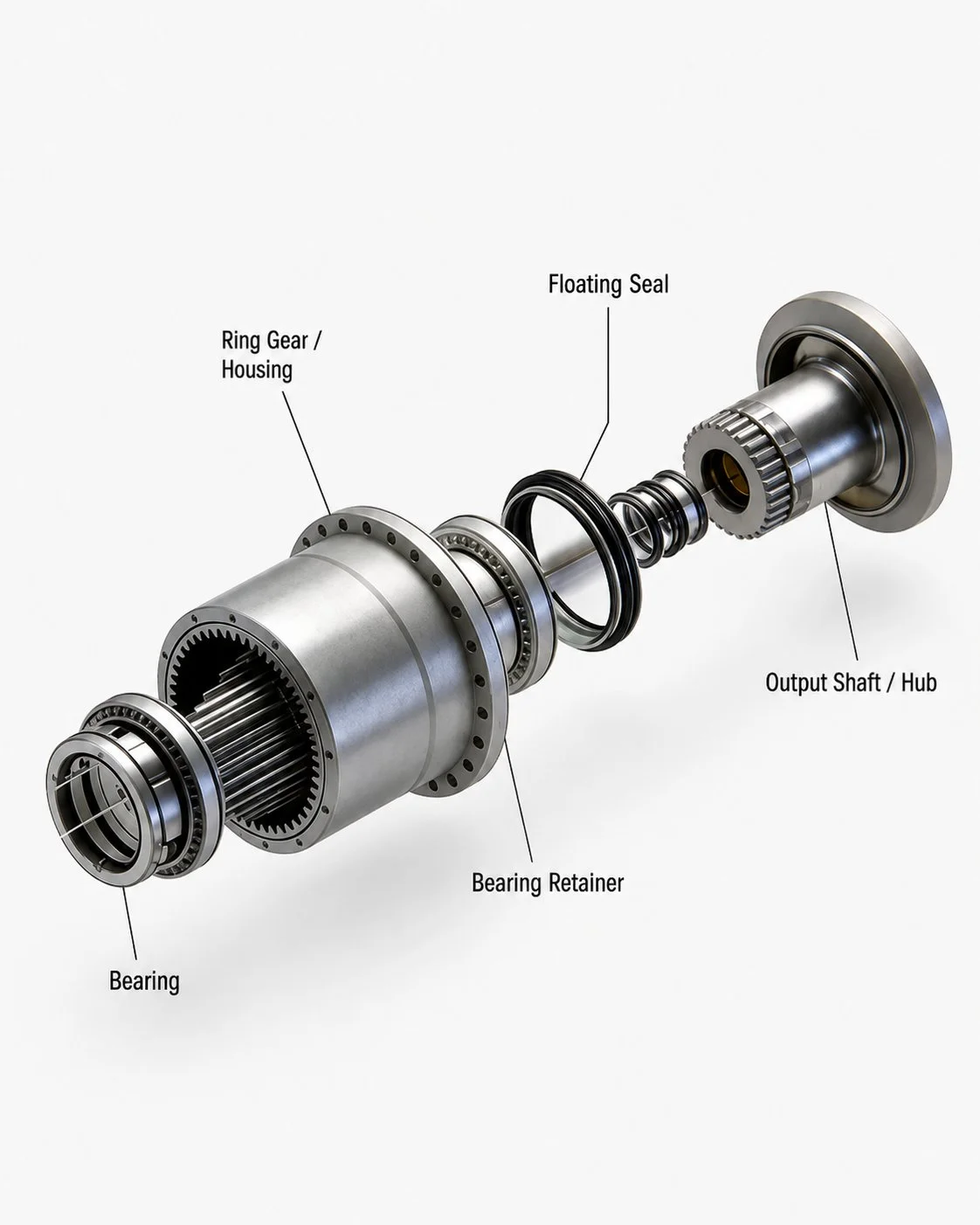
Three Torque Bridges — How Triple-Stage Epicyclic Reaches 24,000 N·m
In a single-stage track drive, one epicyclic set transforms motor input into sprocket output. In a triple-stage unit, three successive epicyclic sets each contribute a partial ratio — and each hands its output to the next stage as an intermediate input. Here is what each stage contributes in EP-SE406BT3, and why three stages rather than two reaches 24,000 N·m more efficiently:
→ ~700–875 rpm
Torque ×4–5
→ ~140–220 rpm
Torque ×4–5 again
→ 26–56 rpm out
24,000 N·m ✓
A two-stage unit reaching i=63–136 would require individual stage ratios of approximately i^(1/2) = 8–12 per stage. At these higher per-stage ratios, planetary gear efficiency begins to decline and planet gear tooth load increases. Three stages at i^(1/3) = 4–5 per stage keep each stage in the high-efficiency planetary operating zone — which is why SE406BT3 achieves >94% despite three stages of reduction. The three-stage architecture is not less efficient — under the right conditions, it is more efficient than two large stages.
At the end of stage 1, the output element (the stage 1 planet carrier, rotating at reduced speed with amplified torque) drives the stage 2 sun gear. Stage 2's carrier then drives stage 3's sun gear in the same manner. The final stage 3 planet carrier is the fixed element (connected to the machine spindle), and the stage 3 ring gear — integral to the rotating outer housing drum — is the output. Three carriers act as torque bridges, each handing an amplified, slowed output to the next stage's centre.
Three stages in this housing naturally produce ratios in the 63–136 range from the optimal 4–5× per stage configuration. Extending to i=220 would require a fourth stage or significantly higher per-stage ratios — neither of which fits this housing design without a complete redesign. More practically, the 100–200 tonne machines SE406BT3 targets do not need i=23: their maximum travel speed at i=63 is already in the 1.5–2.5 km/h range at 350 mm sprocket radius, which is appropriate for machines in this weight class.
The triple-stage architecture of EP-SE406BT3 distinguishes it from every other SE model in this series. In a single-stage T1 unit like EP-SE400T1 or EP-SE401T1, the motor directly drives the sun gear of the one and only epicyclic set — there are no intermediate stages, no carriers acting as inter-stage power bridges, and the ratio is determined entirely by the single set's tooth count ratio. In a double-stage T2 unit like EP-SE402T2 or EP-SE403T2, the first carrier drives the second sun gear, multiplying torque and dividing speed a second time. In EP-SE406BT3, a third stage is added: the second carrier drives the third sun gear, and the third ring gear (integral to the rotating housing drum) delivers the final output. Each of the three carriers in EP-SE406BT3 serves as what the source page describes as a "torque transfer bridge" — and it is an apt description. Three bridges, each reducing speed and raising torque by approximately the same factor, combine to produce 24,000 N·m from a 3,500 rpm motor input in a housing that fits within a standard 100-tonne class crawler undercarriage frame dimension. The fact that this is a track drive planetary gearbox operating at the upper end of the SE series makes the three-stage design both the logical and necessary engineering solution for the rated torque at this weight class.
Why i=63–136 — Purpose-Built for the 100–200 Tonne Machine
The Speed Reality of 100–200 t Machines
A 150-tonne mining excavator's maximum productive travel speed is approximately 1.2–2.0 km/h on flat prepared ground — limited not by gearbox ratio but by machine stability, ground pressure, and hydraulic circuit capacity. At i=63 with a 3,500 rpm motor input and 400 mm sprocket radius, EP-SE406BT3 delivers approximately 2.3 km/h at the track — right at this machine class's practical limit. There is no engineering requirement to travel faster. The additional ratio range of i=23 in EP-SE406AT serves the lower-weight machines in its class, not the 100–200 t class. For this weight class, i=63 is already the fast end of the useful range.
24,000 N·m Within i=63–136 — Margin vs Requirement
A 150-tonne mining excavator on a 20° gradient requires approximately 2 × T_required = 2 × W × sin20° × r to move, where T per drive is approximately 150,000 × sin20° × 0.4 ÷ 2 = 10,260 N·m per drive before shock factor. Apply a 1.8× dynamic shock factor (typical for rocky terrain with sudden hard-ground engagement during bucket crowd cycles): 18,468 N·m per drive — within EP-SE406BT3's 24,000 N·m rated capacity with a 30% safety margin. That margin is important: it means the machine can work into gradient conditions slightly steeper than the design case, or with soil rolling resistance higher than the baseline calculation assumed, without the drive operating at its torque limit. The spring brake at i=100 provides 43,000 N·m per drive parking hold — more than twice the machine's tractive requirement on the same gradient, providing a parking safety factor well above the minimum regulatory requirement in most markets for this machine weight class. The i=63–136 range covers the 100–200 tonne machine class across its entire practical operating speed and load range with appropriate margins throughout the ratio band.
Ratio Selection Within i=63–136
Specify ratio at order using three inputs: (1) required maximum travel speed in km/h, (2) sprocket pitch radius in mm, and (3) maximum motor input speed at maximum pump flow. Formula: i = (n_motor × 2π × r) ÷ (v_machine × 1000/60). Example: 3,200 rpm motor, 400 mm sprocket, 1.8 km/h target → i = (3200 × 2π × 0.4) ÷ (1.8 × 1000/60) = 8,042 ÷ 30 = 268 — too high, indicating the motor displacement needs to increase or the travel speed target revised downward to match the i=63–136 available range. Korea Ever-Power assists with this calculation at no charge, same day as enquiry, and can also confirm whether any available standard ratio within i=63–136 exactly matches or closely approximates the calculated requirement — with the deviation in travel speed expressed as a percentage for engineering sign-off.
Applications — 100 to 200+ Tonne Machine Class
This triple-stage track drive planetary gearbox serves the upper tier of the crawler equipment weight class — machines where 17,000 N·m of EP-SE406AT is insufficient and 24,000 N·m with a focused ratio band is the engineering solution.
Super-Heavy Mining Excavators — 100–250 Tonnes
Large-capacity mining excavators in the 100–250 tonne class — operating in open-pit iron ore, copper, and gold mines — require track drives that the 17,000 N·m SE406AT cannot cover with adequate safety margin. At operating weights of 130–200 tonnes on iron ore mine floor gradients up to 15°, required tractive force per drive (including dynamic shock factor) approaches or exceeds the SE406AT's limit. EP-SE406BT3 at 24,000 N·m covers this class with the margin required for sustained operation. These machines travel slowly and rarely require the fast repositioning ratios of SE406AT — i=90–120 is the typical operating ratio for this weight class.
Super-Heavy Crawler Cranes — 100–500 Tonne Class
Super-heavy crawler cranes in the 100–500 tonne gross vehicle weight class use EP-SE406BT3 for the undercarriage travel drives. These machines position at very low speeds (under 0.3 km/h during crane work) and require maximum tractive force to move the crane when fully counterweighted across compacted but uneven site surfaces. The spring brake provides the mechanical chassis hold during lift cycles — with 430 N·m × i=110 = 47,300 N·m per drive at the sprocket, the hold capacity substantially exceeds any positioning requirement for even the heaviest machine in this class.
Heavy Rotary Drilling Rigs and Foundation Machines
Super-heavy rotary drilling rigs and diaphragm wall crane systems in the 100–200 tonne chassis class require EP-SE406BT3 for travel drives. These machines carry the full weight of the mast, rotary head, kelly bar (which can extend to 100 m depth), and counterweight system during repositioning between bore locations. The spring brake provides position hold with the kelly bar suspended mid-depth — a condition where any chassis movement would be hazardous to both the hole and the machine structure.
Large Mobile Crushing Plants
Tracked primary gyratory and jaw crushers above 100 tonnes operating weight require EP-SE406BT3 for the travel drives. The nodular iron housing sustains the sustained high-amplitude vibration from the crusher mechanism without micro-fracturing — the failure mode of grey iron housing alternatives. The floating mechanical face seals withstand the fine iron ore, limestone, and granite dust that abrades rubber seals within hundreds of operating hours in hard-rock quarry environments.
Heavy Forestry — Large-Frame Feller Bunchers
Large-frame tracked feller bunchers and heavy timber haulers exceeding 100 tonnes operating weight require EP-SE406BT3 when terrain gradients and machine weight exceed the SE406AT's capacity. In commercial logging operations in British Columbia, Scandinavia, and Siberia, machines drag multi-tonne timber bundles across slopes with frozen or saturated ground conditions that impose sustained maximum tractive effort. The downstream agricultural and forestry multi-output gearboxes serving the harvester head and conveyor systems operate on separate PTO circuits from the EP-SE406BT3 travel drives.
Tunnelling and Underground Heavy Transport
Large tracked back-hoe muckers, heavy invert segment transporters, and super-heavy maintenance platforms in metro and road tunnelling operations require EP-SE406BT3 for the travel drives. These platforms move at very low speed — typically 0.5–1.5 km/h — and must sustain full load during continuous operation in high-humidity, 100% enclosed tunnel environments. The floating metal face seals maintain oil containment under the constant water spray from tunnel ventilation and groundwater infiltration. Auxiliary winch drives on the same platforms use worm gear reducers for cable drum self-locking hold independent of the EP-SE406BT3 travel drive spring brake.
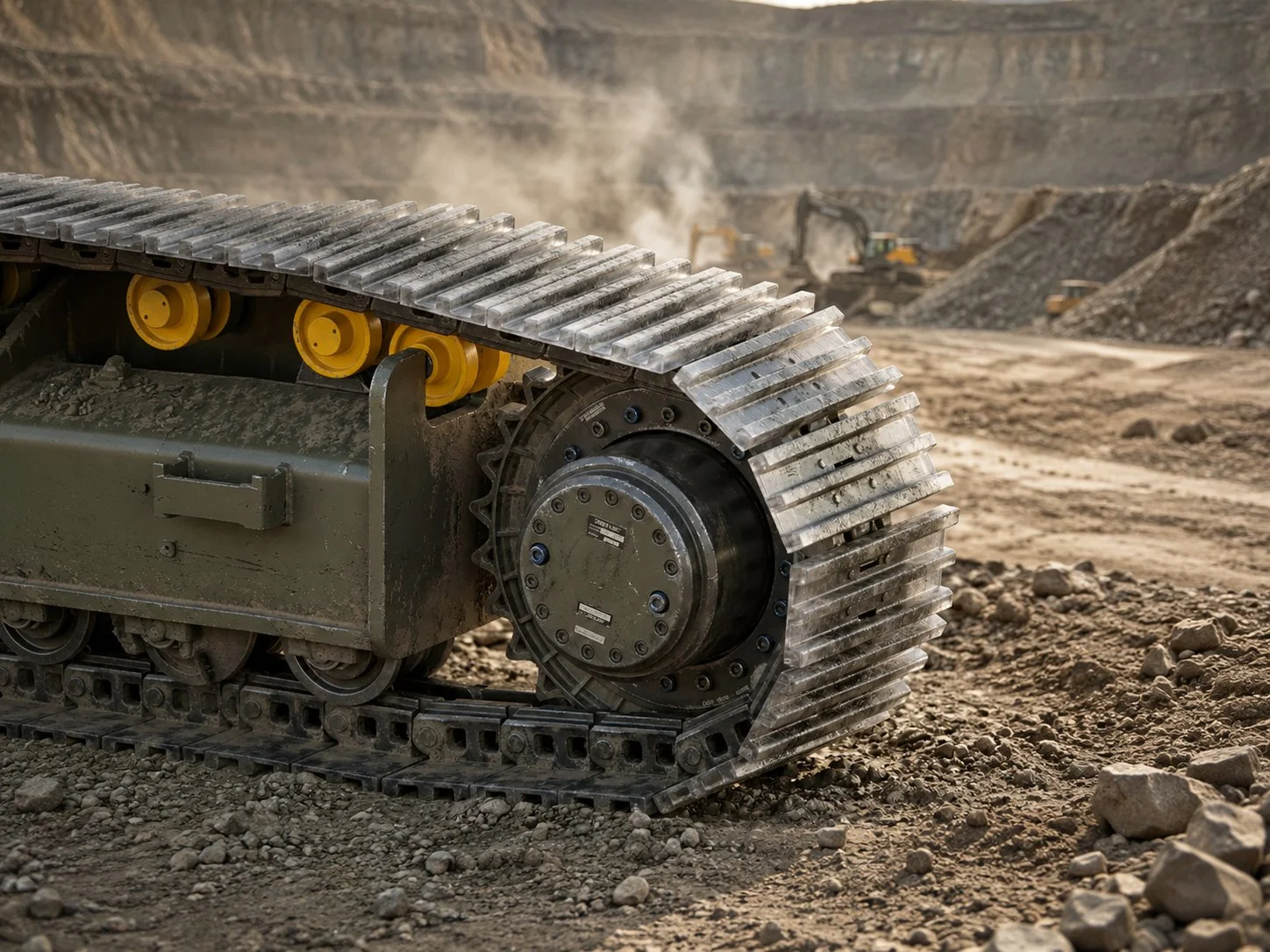
250 kg and +90°C — Mass as a Thermal Asset
The EP-SE406AT weighs 185 kg and is rated to +85°C. The EP-SE406BT3 weighs 250 kg (35% more mass) and is rated to +90°C — 5°C higher. This relationship between higher mass and higher temperature limit is not a coincidence. It reflects how nodular cast iron housing mass functions as a thermal management resource in a track drive.
Thermal Mass — What 250 kg of Nodular Iron Provides
The specific heat capacity of nodular cast iron is approximately 500 J/(kg·K). At 250 kg, the EP-SE406BT3 housing can absorb approximately 125,000 J of heat per degree Kelvin of temperature rise. For a drive generating 5 kW of heat from gear mesh losses (at >94% efficiency, 100 kW input), the housing heats at approximately 5,000/125,000 = 0.04°C per second. This means the housing takes approximately 37 minutes to heat from +25°C ambient to +90°C limit under continuous maximum load — providing substantial thermal inertia for intermittent and semi-continuous duty cycles typical of mining and construction travel operations.
Surface Area — Larger Housing Dissipates More Heat
Natural convection heat transfer is proportional to exposed surface area. The 250 kg EP-SE406BT3 housing has approximately 35% more outer surface area than the 185 kg SE406AT housing. At +50°C temperature differential to ambient (+25°C ambient, housing at +75°C), the larger housing dissipates correspondingly more heat per unit time by natural convection than the smaller unit — which is part of why it can sustain +90°C versus SE406AT's +85°C ceiling under similar duty conditions. In applications where the undercarriage frame encloses the drive partially, this self-cooling advantage is reduced — confirm thermal management with Korea Ever-Power for specific confined installations above +40°C ambient.
Practical Implication for Hot-Climate Deployment
For a 150-tonne mining excavator operating in the Pilbara or Arabian Peninsula at +45°C ambient, the EP-SE406BT3's +90°C housing limit provides 45°C of thermal headroom — adequate for typical travel duty cycles in mining operations, which involve travel intermittently between dig positions rather than sustained maximum-power travel. The SE406AT's +85°C limit provides only 40°C of headroom at the same ambient. For machines with very intensive travel duty cycles at high ambient temperature, confirm the specific duty cycle thermal model with Korea Ever-Power's application engineering team before specifying either unit.
Why Korea Ever-Power
Ratio + Brake + Dimensional Confirmation Same Day
Provide target travel speed (km/h or output RPM), motor specification, machine gross weight, steepest parking gradient, and incumbent drive model. Korea Ever-Power returns the appropriate ratio from i=63–136; brake adequacy confirmation (430 N·m × selected ratio vs your parking requirement); and explicit dimensional cross-reference against your current drive (spindle bore, drum OD, sprocket bolt circle, motor interface, brake pilot port). Same business day, no charge, no order commitment required.
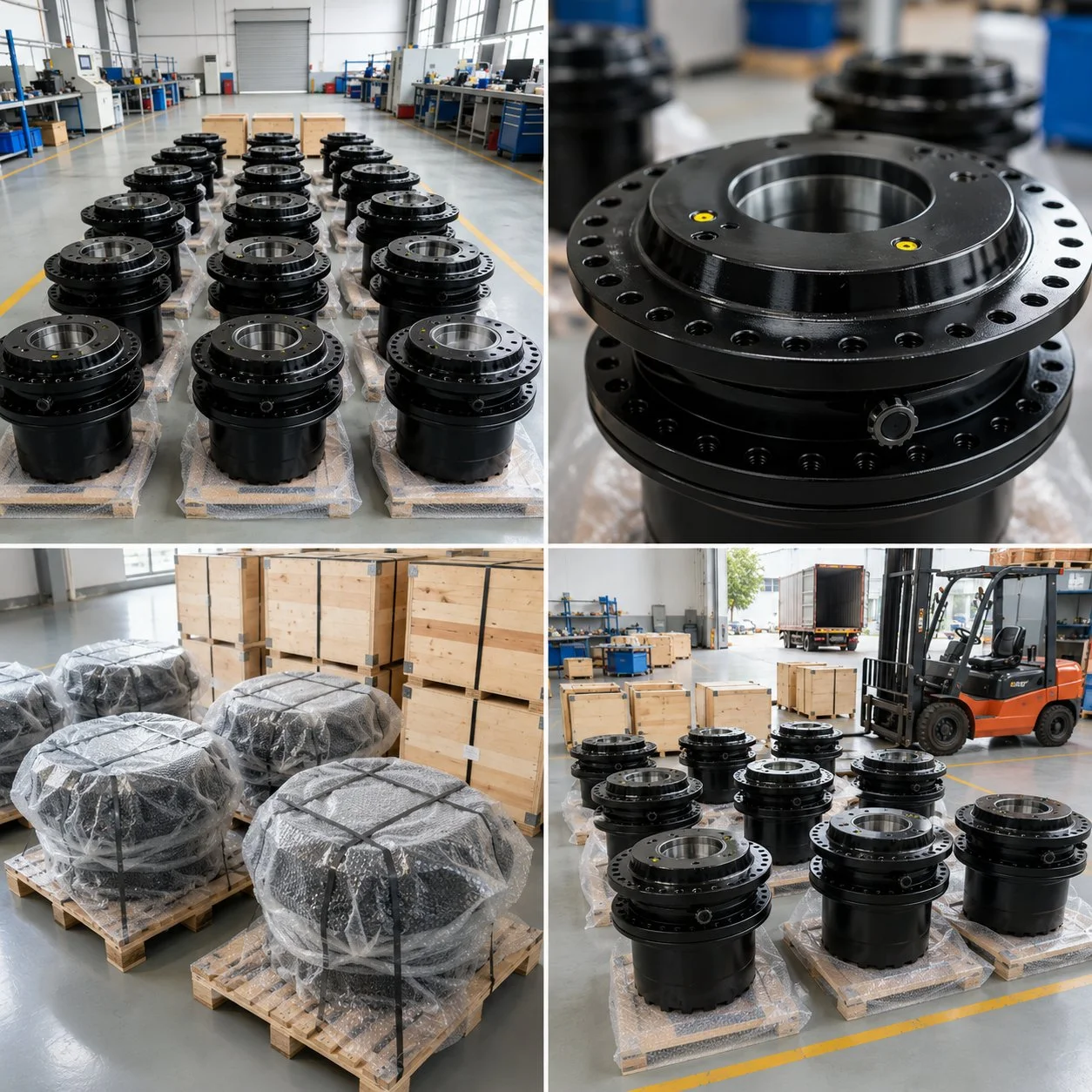
Pre-Assembled and Tested — 250 kg, Ready to Mount
EP-SE406BT3 is available as a pre-assembled, function-tested package: gearbox + matched high-speed axial piston motor + overcenter valve + pressure relief valve. Before shipping, Korea Ever-Power verifies brake engagement (spring applied → drum locked) and brake release (15–30 bar pilot → drum free) and fills to the correct oil level. The assembly arrives at machine assembly ready for chassis mounting and hydraulic line connection only — eliminating all interface and brake function errors at the OEM assembly stage.
Installation at 250 kg — What This Requires
EP-SE406BT3 requires a rated lifting device capable of ≥350 kg (with appropriate safety factor) for installation — a standard construction site crane, a tracked machine auxiliary lift line with a certified chain sling, or a purpose-built installation hoist mounted above the track frame. Korea Ever-Power's dimensional drawing specifies the chain wrap attachment points on the housing drum and the angle of lift required for safe spindle entry into the chassis bore. At 250 kg, the unit requires controlled lowering into the spindle bore with precise angular alignment to avoid cross-threading the retaining bolts — a process that is significantly more sensitive to alignment than lighter single-stage units. Typical installation time is 5–7 hours per side by two qualified technicians with appropriate hoisting equipment: one operating the hoist, one guiding the unit into position. Never attempt manual lifting of EP-SE406BT3. Confirm the lifting attachment method, hoisting capacity, and guide procedure with Korea Ever-Power installation documentation before scheduling the installation shift.
Component Parts — Three Stages Supported Independently
Korea Ever-Power stocks all internal components for EP-SE406BT3 by stage: Stage 1 sun gear + planet set, Stage 2 sun gear + planet set, Stage 3 sun gear + planet set, complete 430 N·m brake disc pack, floating mechanical face seal kits, taper bearing sets for each bearing position, and housing O-ring sets. A failure in Stage 2 gearing does not require Stage 1 and Stage 3 components — parts are quoted and supplied per the failed stage, not as a complete internal kit.
Warranty — 12 Months Commissioning / 18 Months Ship
12 months from commissioning or 18 months from shipment (whichever occurs first), covering all three planetary stages, the brake assembly, and the floating face seals. For OEMs building machines from stocked gearboxes, the 12-month in-service period begins at commissioning — not at shipping date. Warranty component replacement dispatched from Korea Ever-Power stock independently — a brake pack failure under warranty is resolved with a brake pack kit, not a complete 250 kg unit return.
7–14 Day Stock · 30–45 Day Custom
Standard ratio configurations available from Korea Ever-Power stock in 7–14 days. Pre-assembled motor packages and custom ratios: 30–45 days production. For major mining OEMs with recurring fleet requirements, Korea Ever-Power can discuss framework agreements and consignment stocking arrangements to reduce lead times on emergency machine-down replacements. Contact Korea Ever-Power with fleet size, machine model, and annual volume for framework pricing.
Field Reviews
Our 160-tonne electric rope shovel conversion project required replacement track drives that could handle 22,000–24,000 N·m rated torque with an appropriate safety margin on 15° iron ore mine floor gradients. EP-SE406BT3 at i=100 was the specification Korea Ever-Power recommended. The dimensional cross-reference to our legacy Rexroth drives was confirmed within a business day. Field swap at Pilbara site: 6 hours per side with our 50-tonne crane — the 250 kg unit required careful positioning during final spindle engagement, but the process was straightforward with the installation guide Korea Ever-Power provided. At 2,400 hours of iron ore mining operation with 45°C+ summer ambient, no seal, bearing, or gear failures across both drives. Oil samples at 1,000 h showing clean baseline — no metallic particle elevation or water ingress.
We manufacture 250-tonne crawler cranes for bridge and industrial plant construction. At this gross vehicle weight, EP-SE406BT3 at i=120 is the specification for our undercarriage travel drives. The spring brake at i=120 provides 430 × 120 = 51,600 N·m per drive, which our calculations confirm holds the fully counterweighted crane stationary on our acceptance test slope of 12° with a 2.1× safety margin. Korea Ever-Power pre-assembled the gearbox with our specified axial piston motor and set the overcenter valve to our circuit's back-pressure requirement before shipping — the complete drive assembly arrived ready for chassis mounting. At 1,800 hours of crane operation across four production units, all drives are performing within specification. The 250 kg unit weight requires dedicated lifting tooling during erection, but this is standard practice for equipment at this crane scale.
We operate a rental fleet of 120-tonne tracked excavators used in oilsands pipeline and infrastructure work across Alberta and British Columbia. Operating conditions include −30°C winter starts, deeply saturated organic ground, and frequent track immersion in water-saturated clay. EP-SE406BT3 cold-start at −30°C with GL-5 VG 150 oil: no resistance on first travel movement, spring brake releases cleanly at 19 bar pilot pressure (within the 15–30 bar specification). The floating metal face seals have withstood continuous mud submersion — the oilsands clay is particularly abrasive, and previous rubber-sealed drives from another supplier were leaking within 300–400 hours. At 3,200 hours across our fleet, we have not had a single seal, bearing, or gear failure on any EP-SE406BT3 unit. 1:1 swap with the European drives we replaced — no chassis modifications required.
Korea Ever-Power — Complete Drive Portfolio
EP-SE406BT3 is the highest-capacity triple-stage planetary gearbox model in this series, representing 24,000 N·m at the upper bound of the track drive units covered here. Korea Ever-Power's SE track drive range extends beyond 450,000 N·m for the largest mining and tunnelling machines, alongside precision servo gearboxes at the opposite end of the torque spectrum.
Track Drive Planetary Gearboxes — Full SE Series
SE400T1 (1,300 N·m, T1) through SE406BT3 (24,000 N·m, T3, this model). Higher-capacity SE series models beyond 24,000 N·m — including the SE407 series and above — are available for the largest mining excavators and underground tunnelling machines. Contact Korea Ever-Power for the extended capacity range.
High Precision Planetary Gearboxes — Servo and CNC
P0 ≤1 arcmin to P2. EP-TM, EP-TNF, EP-TEG, EP-TMR series. The Korea Ever-Power उच्च परिशुद्धता वाला ग्रहीय गियरबॉक्स range: from 50 N·m servo drives to 24,000 N·m triple-stage track drives — one manufacturer, full torque spectrum.

Winch, Slewing, and Wheel Drives
Marine crane winch drives, offshore platform hoist gearboxes, excavator swing and tower crane slewing drives, wheel drive units for AWPs and wheeled heavy vehicles. Complete heavy-duty industrial transmission portfolio — contact Korea Ever-Power for any drive type beyond the SE track series.
Technical FAQ
Specify EP-SE406BT3 — Ratio, Brake Adequacy, and Dimensional Fit Confirmed Before Order
Provide machine weight, steepest gradient, motor specification, target travel speed, and incumbent drive model. Korea Ever-Power returns ratio selection, brake adequacy calculation, and dimensional confirmation — same day.
24,000 N·m · i=63–136 · Triple-Stage T3 · 430 N·m spring brake · >94% · −25°C to +90°C · ~250 kg
अतिरिक्त जानकारी
| संपादक | सीएक्सएम |
|---|
संबंधित उत्पाद
-
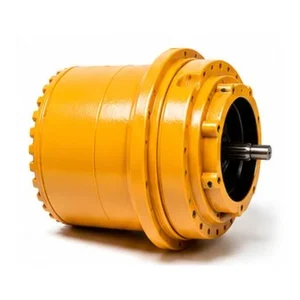
EP-SE410T3 Triple-Stage Track Drive Planetary Gearbox
-
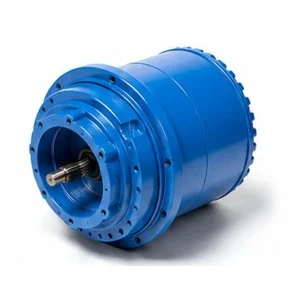
EP-SE407T3 Triple-Stage Track Drive Planetary Gearbox
-
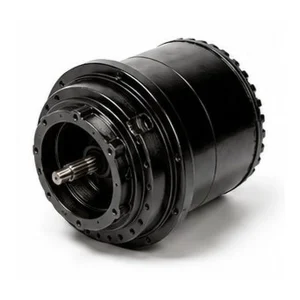
EP-SE406AT Multi-Stage Track Drive Planetary Gearbox
-
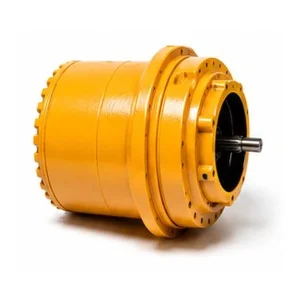
EP-SE405.4T Multi-Stage Track Drive Planetary Gearbox
-
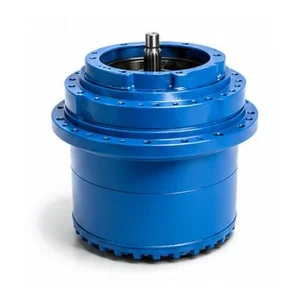
EP-SE403T2 Double-Stage Track Drive Planetary Gearbox
-
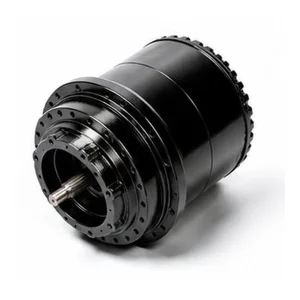
EP-SE402T2 Double-Stage Track Drive Planetary Gearbox
-
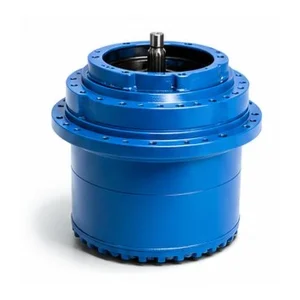
EP-SE401T1 Single-Stage Track Drive Planetary Gearbox
-
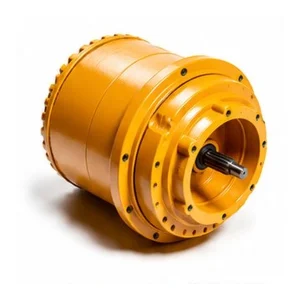
EP-SE400T1 Track Drive Planetary Gearbox