Корея Евър-Пауър
Technical Deep-Dive · IP Protection
IP54 vs IP65 Planetary Gearbox — What the IEC 60529 Rating Actually Means in a Korean Industrial Washdown Environment
IP54 and IP65 appear on almost every прецизна планетарна скоростна кутия datasheet. Fewer than 10% of Korean machine designers know what the underlying IEC 60529 test actually consists of — or why IP54 seals fail in food processing lines where IP65 lasts 20,000 hours. This guide puts the standard and the engineering together.
Get IP Rating Specification Support →
Decoding the IP Code — What IEC 60529 Actually Specifies
The IP (Ingress Protection) rating system is defined by IEC 60529 — an international standard that specifies standardised test methods for evaluating an enclosure’s resistance to the intrusion of solid particles and liquids. The two digits are independent: the first characterises solid particle protection, the second characterises liquid protection. Together they define a test boundary — not a general quality level.
FIRST DIGIT — SOLID PARTICLE PROTECTION
IP 4x: Protected against solids >1mm (wires, tools)
IP 5x: Dust-protected — limited ingress permitted
IP 6x: Dust-tight — no ingress, vacuum test verified
EP-ZDE/ZDF: IP54 → dust-protected
EP-ZDS: IP65 → dust-tight ✅
SECOND DIGIT — LIQUID PROTECTION
IPx4: Splashing water, any direction (oscillating spray)
IPx5: Water jets — 6.3mm nozzle, any direction
IPx6: Powerful water jets — 12.5mm nozzle
IPx7: Temporary immersion — 1m depth, 30 min
IPx9K: High-pressure/high-temp jet (IP69K)
EP-ZDE/ZDF: IPx4 → splash only
EP-ZDS: IPx5 → water jet ✅
The single most important implication for Korean industrial practice: IP54 specifies protection against splashing water — the test uses an oscillating spray that approximates incidental splash. IP65 specifies protection against water jets — the test uses a 6.3mm nozzle at defined flow rate and distance. HACCP washdown uses a handheld hose at 2–8 bar applied from close range. The IP54 test was not designed to simulate HACCP washdown. The IP65 test approximates it. In any environment where HACCP hose-down occurs, IP54 provides no meaningful protection guarantee.
The Exact IPX5 Test Parameters — What EP-ZDS Actually Passed
IP ratings are not manufacturer claims — they are compliance certifications to specific IEC test procedures. The following are the precise parameters of IEC 60529 Table 6 (IPX5 test) and Table 4 (IPX4 test), which represent the actual difference between what EP-ZDS passed and what EP-ZDE passed. Understanding these parameters allows an engineer to evaluate whether their actual washdown environment falls within the certified test boundary.
| Test Parameter |
IPX4 Test
EP-ZDE/ZDF (IP54) |
IPX5 Test
EP-ZDS (IP65) |
Difference |
| Water delivery |
Oscillating tube spray
(no defined nozzle) |
6.3mm nozzle
(defined orifice) |
Jet vs splash — fundamentally different |
| Flow rate |
10 L/min |
12.5 L/min (±5%) |
25% higher flow in IPX5 |
| Test distance |
Not specified |
2.5–3 m |
IPX5 has defined jet energy at target |
| Duration |
10 minutes minimum |
1 min per 0.1m² surface
(≥3 min for typical gearbox) |
IPX5 shorter but higher intensity |
| Water pressure at nozzle |
Not specified
(low, splash only) |
~30 kPa (0.3 bar)
defined by nozzle+flow |
Defined impingement energy |
| Direction coverage |
Всички посоки
(via oscillating tube) |
Всички посоки
(operator moves nozzle) |
Both test all angles |
| Typical HACCP washdown |
NOT simulated by IPX4 |
Closely simulated by IPX5 |
HACCP hose ≈ 2–8 bar, 6–10mm nozzle |
What IP65 does NOT protect against — critical boundary
IP65 (IPX5) tests with ~0.3 bar nozzle pressure. Standard HACCP washdown in Korean food processing uses 2–8 bar at the nozzle. At pressures above 1–2 bar from close range (<1m), even IP65 seals can be compromised. For high-pressure washdown (>3 bar), IP66 (12.5mm nozzle, higher pressure) or IP69K (80°C, 100 bar, close range) is the appropriate specification. EP-ZDS is certified IP65 — adequate for standard HACCP hose-down at operating distances of 2m or more. For high-pressure close-range cleaning, consult Korea Ever-Power engineering for supplementary seal or shroud options.
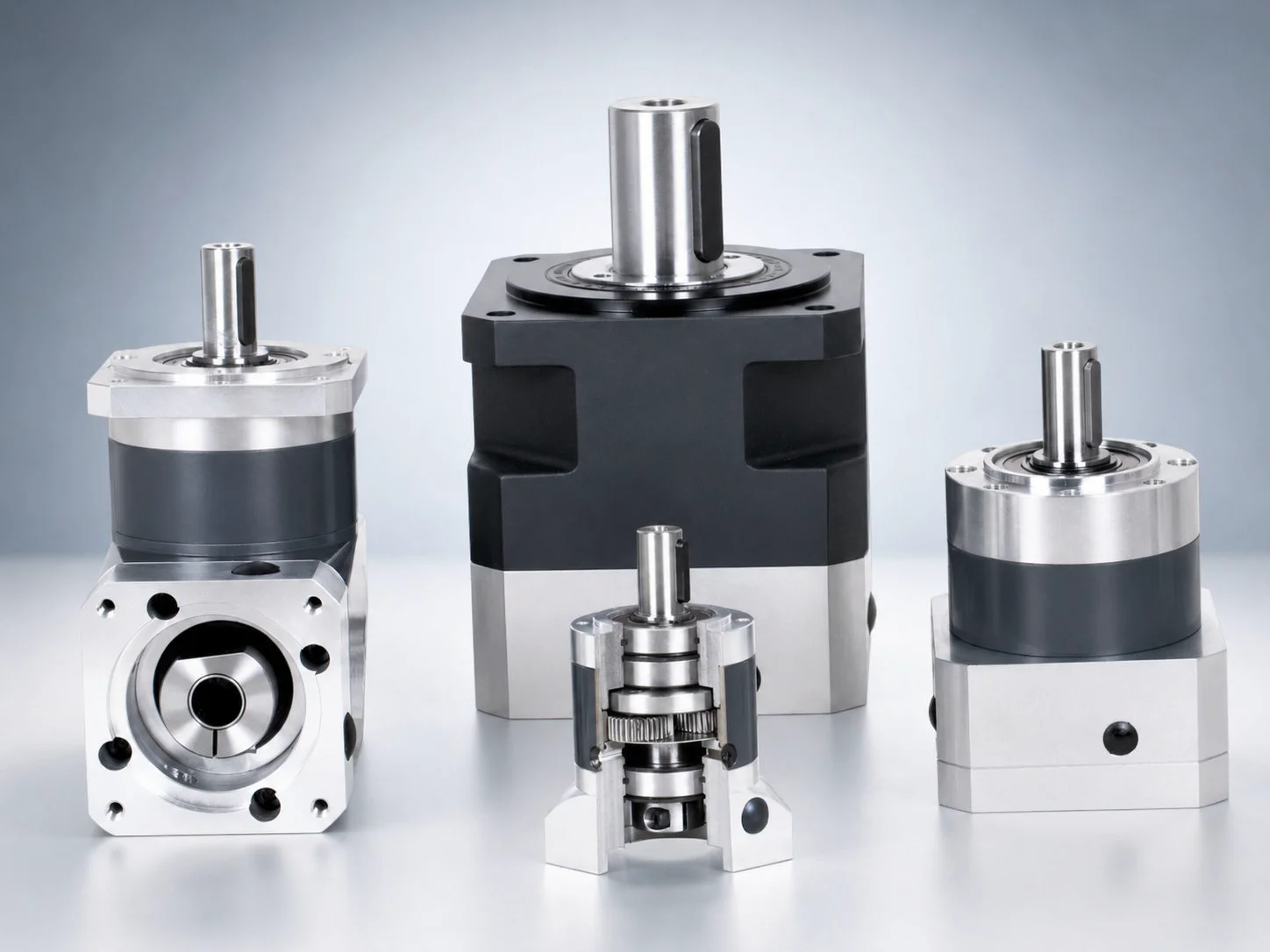
Korea Ever-Power EP series planetary gearboxes span two IP protection levels: the ZDE, ZDF, ZDWE, and ZDWF series carry IP54 — correct for clean indoor servo automation environments. The ZDS high-stiffness series carries IP65 with FKM seals — the required specification for food processing, automotive welding lines, outdoor solar trackers, and any environment involving direct liquid jet exposure.
Вижте спецификациите на планетарната скоростна кутия →
How IP54 Seals Fail in HACCP Washdown — The Chemical and Mechanical Mechanism
Understanding why IP54 fails in HACCP environments requires understanding what happens at the seal material level — not just the physical IP test. The failure is not simply “water gets in.” It is a two-stage process: first the seal material degrades chemically under the disinfectant chemistry, then the mechanically weakened seal allows moisture ingress under the jet pressure of washdown.
IP54 Gearbox (NBR seal) — Failure Timeline in Daily HACCP Washdown (3×/day, 6 bar)
0 h
Seal performs as designed. Water excluded at IP54 splash standard. No issue.
500 h
Micro-cracking begins in NBR lip from repeated thermal cycling (cold water on hot gearbox housing). Peracetic acid (PAA) at 0.2% begins oxidative attack on NBR polymer chains — swelling and surface softening observed at lip edge.
1,000 h
NaOH (caustic soda, 2%) accelerates NBR swelling. Seal lip loses spring force — the sealing contact pressure against the shaft drops below minimum. Direct jet at 2+ bar now creates momentary seal-lift on each washdown cycle.
1,500 h
First moisture ingress confirmed. Water contacts sealed grease — emulsification begins at the grease/water boundary, forming white or grey paste at outer grease layer. Grease lubricating properties begin to degrade.
2,000 h
Visible failure signs: Grease weeping at output shaft seal (white/grey emulsified grease visible on housing exterior). Housing discoloration. If output shaft is in food zone, this is a HACCP critical control point violation.
2,500 h
Bearing contamination from emulsified grease entering rolling element contact zones. Rust formation on bearing races. Predicted L10 life projection completely invalidated.
3,000 h
Gearbox failure: Audible noise, vibration, positioning errors. Unplanned production stop. Replacement required. Note: the gearbox original rated L10 was 20,000 hours — seal failure caused premature failure at 15% of rated service life.
NBR (Nitrile) — IP54 Standard Seal
Temperature range: −40°C to +100°C
PAA resistance: Poor — swells, softens
NaOH resistance: Moderate
UV/Ozone: Poor — surface cracking
Cost: 1× reference
In HACCP: fails at ~1,000h of chemical exposure
FKM (Viton) — EP-ZDS IP65 Standard Seal
Temperature range: −20°C to +200°C
PAA resistance: Good — stable at food conc.
NaOH resistance: Good
UV/Ozone: Excellent — no degradation
Cost: 3–5× NBR (negligible vs unit cost)
In HACCP: stable at rated L10 = 20,000h
Korean Industrial Environment Analysis — IP54 vs IP65 by Deployment Scenario
The following analysis applies the IEC 60529 boundary conditions to the eight most common deployment scenarios in Korean industrial automation. For each scenario, the assessment identifies both the dominant liquid exposure mechanism and whether it falls within the IPX4 boundary (splash only) or the IPX5 boundary (direct jet).
IP54 ✅
General indoor servo automation — conveyor indexers, robot axes, packaging machines
No direct liquid exposure. Humidity and condensation only. IP54 provides adequate protection for the full 20,000h L10 service life. Use EP-ZDE/ZDF. IP65 provides no additional benefit and costs more without return.
ZDE / ZDF
IP65 ✅
Food processing — HACCP daily washdown (Korean MFDS 식품위생법)
Direct hose-down 1–6×/day with NaOH + PAA at 2–8 bar. Crosses IPX5 boundary — IP54 NBR seal fails chemically within 1,000h. FKM seals mandatory. IP65 (EP-ZDS) is minimum viable specification.
ZDS only
IP65 ✅
Automotive body shop welding line (현대자동차, 기아 supplier lines)
Welding spatter, cooling water mist, periodic floor washing (1–2×/shift). Spatter addresses first digit (IP6x dust-tight required for spatter). Cooling water and periodic floor wash address second digit — IP65 recommended. Korean Tier-1 automotive suppliers typically mandate IP65 in body shop specifications.
ZDS only
IP65 ✅
Outdoor solar tracker — inland Korean site (전남, 충남 solar farms)
25-year design life. Sustained rain exposure — while rain pressure is lower than IPX5 test, 25-year continuous exposure with thermal cycling, UV degradation of NBR, and condensation ingress makes IP65 the only safe specification. See the
solar tracker guide.
ZDS only
IP65+
Coastal solar tracker or offshore equipment (제주도, 서해안 coastal sites)
Salt spray accelerates chloride attack on aluminium housings and NBR seals simultaneously. IP65 with FKM seals is mandatory. In addition, specify corrosion-resistant surface treatment (anodising + coating) on housing for salt-fog exposure at <1km from coastline.
ZDS + coating
IP54 ✅
Indoor AGV — clean warehouse logistics (쿠팡, 네이버, 물류센터)
Controlled indoor environment. No liquid exposure. Epoxy or VCT floor, no regular washdown. IP54 provides full service life at 20,000h L10. ZDE/ZDF or ZDWF at IP54 is correct and cost-efficient. See the
AGV guide for axial force specification.
ZDE / ZDWF
IP54 ✅
Semiconductor cleanroom (삼성, SK하이닉스 협력사)
Positive-pressure ISO Class 5–7 cleanroom. No liquids, filtered air, controlled temperature and humidity. IP54 provides adequate protection. Primary concern is particle emission from gearbox — verify housing seal integrity rather than IP level.
ZDE / ZDF
IP65 ✅
Cold storage / freeze tunnel AGV (−25°C, periodic washdown)
Two combined hazards: condensation ingress during thermal cycling when unit moves between frozen and ambient zones, plus periodic floor washing with hot water. IP65 seals prevent condensation ingress; FKM maintains seal force at −25°C (NBR stiffens at −15°C, losing sealing contact pressure). EP-ZDS rated to −25°C minimum.
ZDS only
10-Year Total Cost of Ownership — The Financial Case for IP65
The unit price of an EP-ZDS (IP65) over an EP-ZDE (IP54) at equivalent torque class is approximately 35–45% higher. In environments where IP54 would deliver full rated service life, this premium has no return. In HACCP washdown environments, the same premium is recovered many times over — because IP54 units fail at approximately 10–15% of their rated service life, creating repeated unplanned replacement costs and production downtime.
10-Year TCO Comparison: HACCP Daily Washdown, 2-Shift Operation (4,000h/year)
IP54 Unit in HACCP Washdown
Actual service life: ~2,000h (3 months)
Replacements in 10yr: 20 (unplanned)
Each replacement: 2h downtime
@ ₩5,000,000/h production loss:
Per event: ₩10,000,000 downtime
10yr downtime cost: ₩200,000,000+
IP65 Unit (EP-ZDS) in Same Environment
Actual service life: 20,000h (5 years)
Replacements in 10yr: 2 (planned)
Planned replacement: scheduled downtime
No unplanned production loss events
Unit premium: ~40% over IP54 equiv.
10yr downtime cost: ~₩0 unplanned
IP65 (ZDS) saves ₩200,000,000+ in unplanned downtime over 10 years. Unit purchase premium: typically ₩200,000–500,000 per unit. The premium is recovered within the first IP54 failure event.
Assumptions: 3 washdown cycles/day, 6 days/week; IP54 NBR seal fails at ~2,000h in daily PAA exposure; IP65 FKM seal reaches L10 = 20,000h; planned replacement: zero unplanned production loss. Downtime rate ₩5,000,000/h: Korean food manufacturing line (MFDS compliance investigation overhead included).
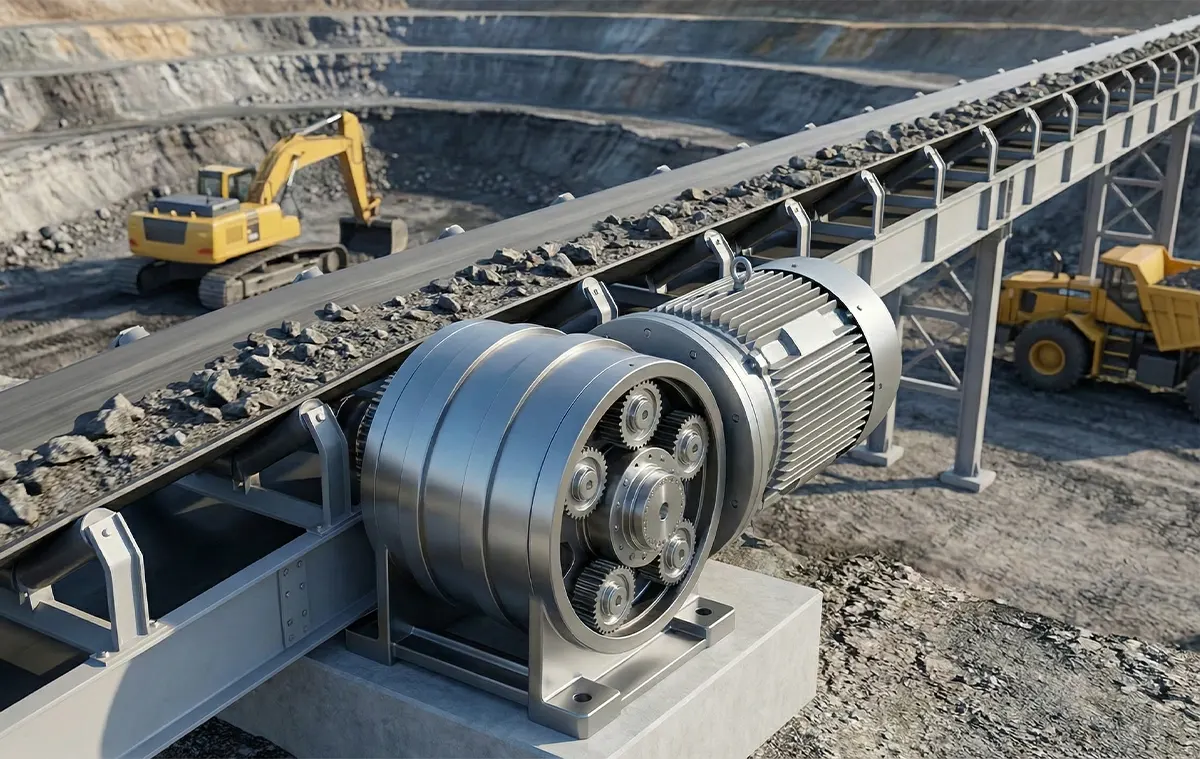
Heavy industrial and automotive body shop environments — where welding spatter, cooling water mist, and periodic floor washing coexist — represent the core IP65 use case for Korean manufacturing. Korean automotive Tier-1 supplier quality management systems typically mandate IP65 for all drive components in body shop welding cell environments, regardless of whether direct water contact is anticipated in the design. View EP-ZDS IP65 specifications →
How IP Rating Determines Whether Sealed-for-Life Lubrication Actually Lasts for Life
All EP series precision planetary gearboxes are sealed for life with PAO synthetic grease — no oil changes required for the rated 20,000h L10 service life. This claim is valid when the seal integrity is maintained. The 20,000h commitment is a bearing fatigue calculation, not a seal durability guarantee. If the seal fails at 2,000h, the grease is contaminated, and the bearing fatigue life prediction is voided regardless of the grease quality.
✅ IP65 (ZDS) — Sealed-for-Life Claim Holds
FKM seals resist PAA, NaOH, chlorine, and UV for the full operating temperature range. The grease cavity remains isolated from the external environment for 20,000h under rated conditions. Bearing fatigue life predictions remain valid. The sealed-for-life maintenance-free claim is delivered as specified.
❌ IP54 (ZDE) in Washdown — Sealed-for-Life Claim Is Voided
NBR seal fails at ~1,000–2,000h under PAA/NaOH chemical exposure. Moisture enters grease cavity. PAO grease emulsifies — loses its viscosity index, oxidation resistance, and EP additive effectiveness. Bearing contamination occurs. The 20,000h L10 bearing fatigue calculation assumed clean grease — contaminated grease cannot sustain this prediction.
Practical implication for Korean food and automotive engineers: When specifying a “sealed-for-life” planetary gearbox for a HACCP or automotive body shop environment, always verify that the IP rating is consistent with the deployment environment. A sealed-for-life IP54 gearbox in a HACCP washdown line is не sealed for its rated life — it is sealed only until the first seal degradation event. The life extension from sealed-for-life design requires IP65 sealing to deliver its benefit in wet environments. This is why the lifetime lubrication guide recommends IP65 as a prerequisite for maintenance-free operation in any environment with liquid exposure.
Complete Decision Matrix — IP Rating by Korean Industrial Application
| Korean Industrial Application |
Liquid Exposure Type |
Worst-Case
Contact |
Min IP
Задължително |
Seal
Материал |
EP Series |
Key Driver |
| General industrial servo |
None / humidity |
Condensation |
IP54 |
NBR |
ZDE/ZDF |
Clean environment |
| Food processing HACCP |
NaOH + PAA jets |
Direct hose-down |
IP65 |
FKM |
ZDS |
Daily jet + chemical |
| Automotive body shop |
Spatter + cooling water |
Periodic jet wash |
IP65 |
FKM |
ZDS |
Spatter + washdown |
| Outdoor solar tracker (inland) |
Rain, UV, thermal cycle |
Sustained rain |
IP65 |
FKM |
ZDS |
25yr exposure, UV |
| Outdoor solar (coastal) |
Salt spray + rain |
Salt fog |
IP65 + coat |
FKM |
ZDS |
Chloride corrosion |
| Indoor AGV (clean warehouse) |
None |
Dry / humidity |
IP54 |
NBR |
ZDE/ZDWF |
Clean indoor, no liquid |
| Semiconductor cleanroom |
None (controlled) |
None |
IP54 |
NBR |
ZDE/ZDF |
Particle emission matters more |
| Cold storage / freeze tunnel |
Condensation cycling |
Thermal ΔT + wash |
IP65 |
FKM |
ZDS |
−25°C + condensation |
Korea Ever-Power EP-ZDS IP65 precision planetary gearboxes undergo seal integrity verification as part of the production quality process. The IP65 certification covers both the FKM output shaft lip seal and the housing joint sealing — ensuring that the certified protection level is present in every shipped unit, not just certified on a sample. IP65 certification documentation is available for HACCP compliance audit submission. View EP-ZDS specifications →
IP Rating Specification Checklist — Five Questions Before Ordering
01
Will any direct water jet contact the gearbox housing?
Any hose-down, pressure wash, or direct nozzle spray = IP65 (EP-ZDS) required. Even one washdown event per week is sufficient to degrade IP54 NBR seals over a 12-month horizon in food processing chemical environments.
02
What disinfectant chemistry is used?
PAA or high-concentration chlorine = FKM seals mandatory regardless of IP rating. NaOH or QAC alone = NBR acceptable but FKM preferred. In any food or pharma HACCP application, always specify FKM explicitly in the order — it is not automatically applied.
03
Is the installation outdoor or subject to sustained weather exposure?
Any outdoor installation with a design life of 5+ years = IP65. UV alone degrades NBR seals (ozone cracking) over 3–5 years regardless of rain exposure. FKM seals and IP65 housing integrity are both needed for reliable outdoor service life.
04
Does the environment involve temperature cycling that causes condensation?
Cold storage AGV, freeze tunnel conveyor, or any equipment that cycles between low and ambient temperature = IP65. Condensation forms on cold housing surfaces when moved to ambient temperature, and cycles into seal joints under repeated ΔT loading.
05
Is the IP65 certification document required for compliance audit?
For HACCP audits (Korean MFDS 식품위생법), automotive supplier quality certification (IATF 16949), and offshore/outdoor installation verification, the IP65 test report and certificate are required documentation. Korea Ever-Power provides IP65 certification documentation on request for qualified OEM orders.
Need IP Rating Confirmation or Certification Documents?
Korea Ever-Power provides IP65 certification documentation for EP-ZDS units for HACCP, automotive supplier quality, and outdoor installation compliance submissions. For borderline environments, our application engineering team provides a formal IP rating assessment based on your actual washdown pressure, nozzle distance, frequency, and disinfectant chemistry — in Korean and English.
EP Series — IP54 and IP65 Specifications
EP-ZDS Series — IP65
Food / auto / outdoor / cold storage · IP65 · FKM seals · 1,800 N·m · −25°C to +90°C · Ct 130 N·m/arcmin
Вижте спецификациите →
EP-ZDE Series — IP54
Clean indoor servo automation · IP54 · <8 arcmin · 96%/94%/90% efficiency · sealed-for-life in clean environments
Вижте спецификациите →
EP-ZDF Series — IP54
Square-flange inline · IP54 · bolt-on plate mount · same specs as ZDE · clean warehouse AGV, dry packaging, general automation
Вижте спецификациите →
Редактор: Cxm